








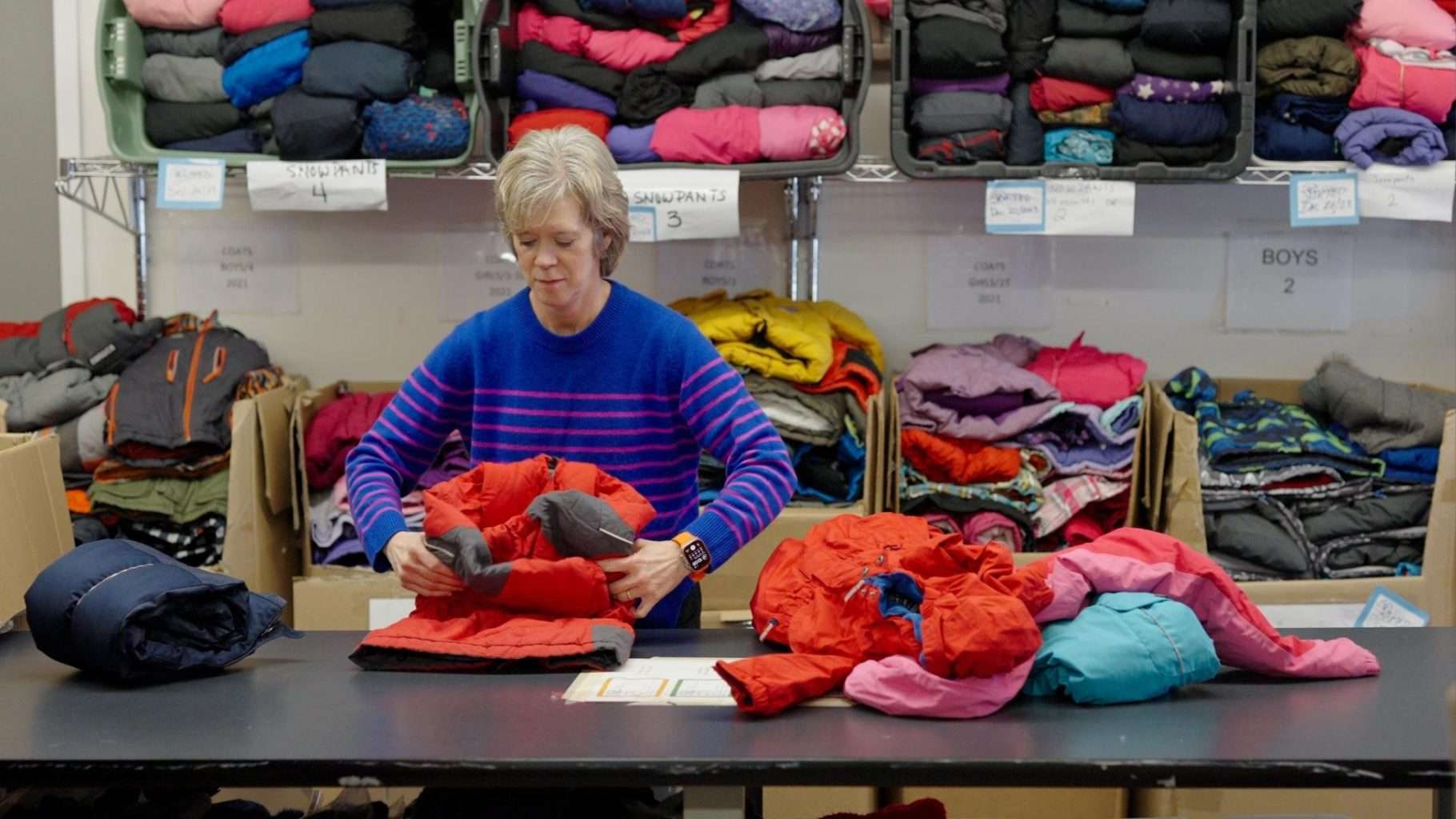
An alarming trend is growing across the country, with social services working overtime to meet the demands of families and individuals in need. Winnipeg’s United Way is no exception. Action is needed with a steadily increasing waitlist of individuals seeking winter supplies and other services.
With the bizarre November weather, many may have yet to begin to pull winter items from their closets, but when the colder temperatures do hit, families will be in desperate need of these items. Melissa Burgess, Senior Manager of Engagement Initiatives at United Way Winnipeg, says the situation is severe.
“We’re getting a lot of calls now from people who are, you know, wondering how they’re going to get their winter gear for themselves or their kids,” Burgess says. “We’re in a bit of a pickle because there’s a ton of items that we are out of, and that means that we’ve got just orders piling up.”
Each year, United Way Winnipeg provides around 6,000 articles of winter clothing, but with insufficient donations, the list of requests has grown to over 300, representing more than 1,000 individual items. United Way is calling on the community to help out. Donations of warm, waterproof mittens, ski pants (especially sizes 6-12), winter coats, hats, and boots are urgently needed. Families with gently used items are encouraged to drop them off at designated locations, where volunteer menders will repair any minor damages to extend the life of these garments.
Koats for Kids is one of many programs supported by United Way, with the organization serving as the city’s community fund for 125 agencies and programs across Winnipeg founded on three main pillars:
- Empowering children to reach their potential.
- Assisting families in overcoming poverty.
- Fostering strong, healthy communities.
However, many of these nonprofits and programs are facing dual challenges: meeting immediate basic needs like food, clothing, and hygiene items while sustaining long-term programs aimed at helping individuals achieve independence. The high demand for support has stretched resources thin, with many agencies pivoting their focus to address immediate crises, leaving less capacity for proactive, sustainable interventions.
“It’s about every 13 seconds that people are going to one of the agencies the United Way funds to seek out support. That could be a kid going to an after-school program, and that could be a parent going to get some support. Parenting classes or meal kits, accessing counselling, looking for a job, employment, or any one of those things. Every day, thousands of people are reaching out to these organizations to get support.”
In the 2024 report of the National Advisory Council on Poverty, they say that poverty is rising in Canada. In 2022, 1.4 million more people were living in poverty than in 2020, a 3.5 per cent increase. The report indicates that if this continues, Canada could miss its 2030 goal of cutting poverty in half and even lose progress. According to CanadaHelps, one in five people in Canada turned to charitable services for basic needs in 2023. Of those, nearly 70 per cent were using charity for the first time. The growing demand for nonprofit services exceeds the sector’s ability to keep up.
While immediate needs are critical, Burgess stresses the importance of addressing systemic issues.
“We really want to be seeing a long-term end to some of these challenges. People shouldn’t be struggling to find food. People shouldn’t be struggling to have their needs met and have a roof over their heads. While it’s great that organizations are stepping up and helping to address some of these needs, we need to find some more long-term solutions so that we don’t have people in those situations in the first place.”
As a community funder, United Way is uniquely positioned to collaborate with businesses, nonprofits, government, and other sectors to drive collective impact and meaningful change. Efforts like the Food Security Network and programs like Huddle Manitoba, a safe, integrated service hub for youth, are examples of innovative approaches to addressing the ongoing challenges Manitobans face.
Anyone seeking aid can utilize 2-1-1 Manitoba, a phone service and online resource that people can use to connect to government and social services throughout the province.
– Ryan Funk, U Multicultural