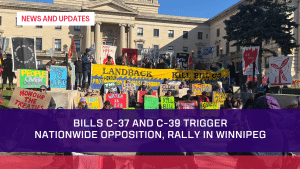








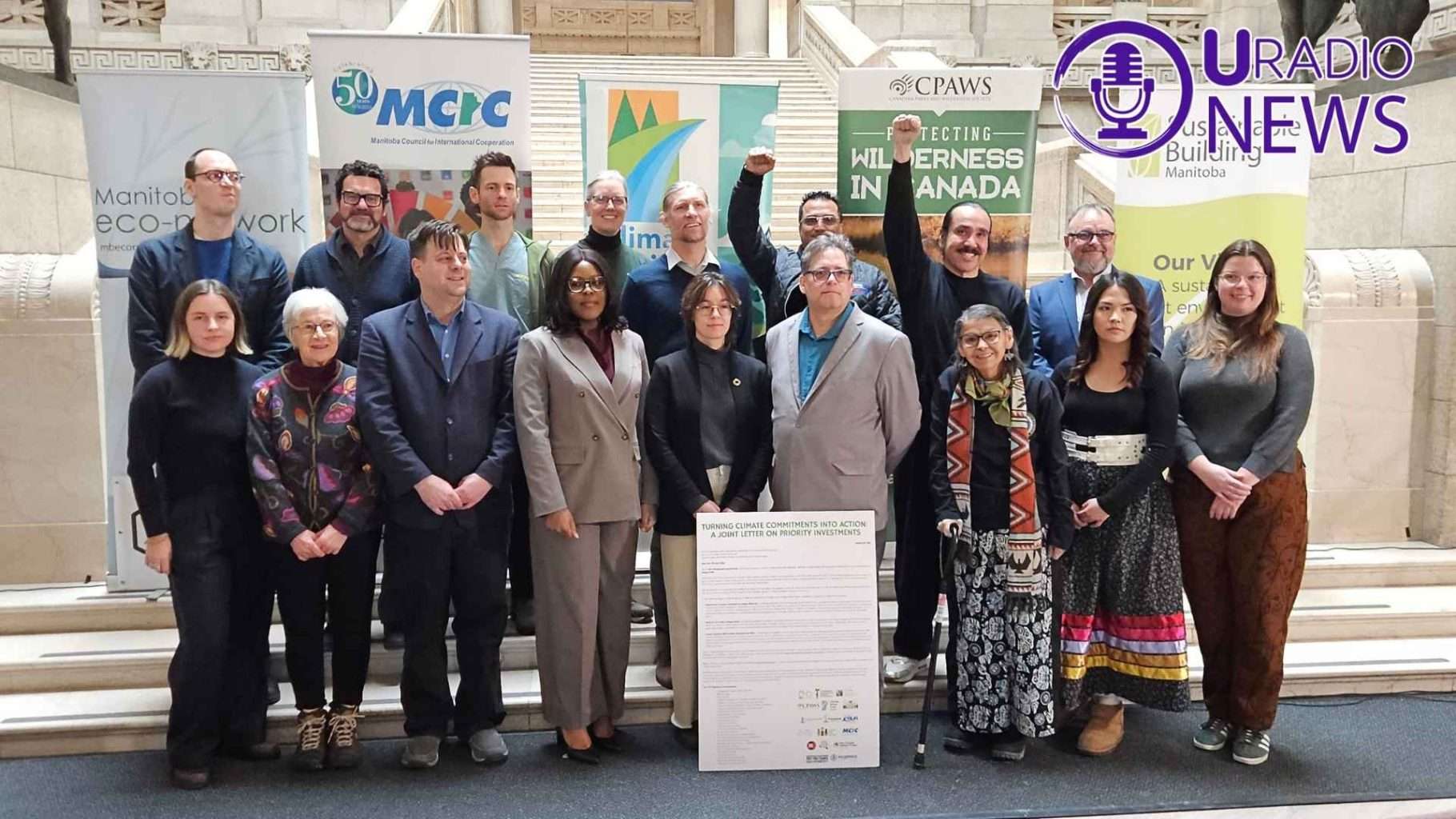
On Thursday, a coalition of 26 Manitoba civil society organizations gathered at the Manitoba Legislature to deliver a joint letter urging the provincial government to significantly increase investments in climate action in the upcoming 2026 budget.
The letter was presented amid growing concern that, while Manitoba has made climate commitments, current spending levels and policy priorities don’t align with the province’s goal of achieving net-zero emissions by 2050. The organizations represent thousands of workers, businesses, and community members and are calling for accountability.
Laura Cameron, Director of Programs and Strategy at Climate Action Team Manitoba, says the province’s plan, “Manitoba’s Path to Net-Zero,” released last fall, has yet to reflect its ambitions. Investments in emissions reduction totalled approximately $72 million. In comparison, roughly $340 million was used for the “gas tax holiday,” and an estimated $1.15 billion was spent on highway construction in 2024 and 2025.
Cameron said this imbalance risks increasing long-term costs for Manitobans and that the time for action is now.
“We already see that climate change is cutting into Manitoba’s bottom line. We see that the wildfires and drought from last year have really affected the provincial deficit. And we know that that’s only going to get worse the longer we delay investing in climate action.”
Manitoba continues to experience climate disasters, with yearly flooding and wildfires. During the 2025 wildfire season, more than 1.2 million hectares burned, destroying communities and posing severe health risks. Cameron said that stronger climate investments could help reduce the frequency and severity of such events, ease cost-of-living pressures, and improve health outcomes.
“It will take some upfront commitment. But ultimately, the costs will only grow the longer we delay investing. And there are also many other benefits for Manitobans related to health and cost of living that can come from climate investments.”
Three priorities were outlined in the letter: energy-efficient homes and heat pumps, expanded public transit, and protecting 30 per cent of Manitoba’s lands and waters by 2030.
“There was a lot of discussion that went into it, but ultimately we landed on these three because we think they’re timely. They’re in line with what this government has committed to doing and provide those other benefits for Manitobans. So we see it as sort of a win-win.”
Elizabeth Kaggwa, speaking on behalf of Sustainable Building Manitoba, said greater investments in energy-efficient homes and retrofits will be an excellent support for Manitobans.
“That is something that we are pushing for as an organization that would benefit a lot of households, businesses, as well as the Manitoba economy,” Kaggwa said. She noted that efficient windows and doors, and technologies like heat pumps, will help ease our energy demands. “Helping the life cycle of a building will help us eventually meet that energy demand of the grid that we are inputting right now.”
Niall Harney of the Canadian Centre for Policy Alternatives said investments in efficiency and transit would deliver long-term, equitable benefits.
“We’ve, for a long time, been publishing research on the need for investments in climate action in the province and the potential spinoff benefits, and how to make those investments equitable,” Harney said. “We really need systemic change. And that starts here with investments from the provincial government, who can lead and create policy, to develop the long-term change we need in our energy system, in transportation to really provide people alternative options, so that they can participate in, you know, reducing fossil fuel reliance.”
Environment and Climate Change Minister, the Hon. Mike Moyes, attended the event and welcomed the letter.
“Think it’s fantastic. This is the people’s building. We always want to hear from Manitobans and the groups that they represent,” Minister Moyes said
He pointed to Efficiency Manitoba as a cornerstone of the province’s approach.
“Efficiency Manitoba has been doing phenomenal work,” he said. “They’re developing the programs that help Manitobans retrofit their homes and public spaces, and we’re looking to expand their ability to do that.”
Environmental groups also stressed the importance of protecting nature as part of climate action. Ron Thiessen of the Canadian Parks and Wilderness Society Manitoba (CPAWS) said conservation and economic development are not mutually exclusive.
“The conversation about the balance is going in a productive sense in that we’re advocating or trying to make clear that protecting nature and deciding where the areas for nature are that need to be conserved. Securing those actually gives more certainty to business and industry because they’ll have a better idea of where development might be possible without contention.”
Minister Moyes echoed that view.
“I don’t actually see them as competing. Our economy and our environment can go hand in hand, especially here in Manitoba, where we’re actually leaning into our strengths when we are taking a climate-friendly approach. That’s what our path to net zero is all about: leaning into those strengths.”
Minister Moyes also highlighted the province’s commitment to Indigenous-led conservation.
“When it comes to protecting more of nature, we’re working hand in hand with First Nation communities and municipalities. And with wind power projects, Indigenous communities will be owners, selling power back to Manitoba Hydro.”
Maintaining momentum and ensuring government follow-through will require continued public pressure.
“The first step is getting the commitments, and we’ve seen some good commitments from the government,” Cameron said. “The second step is to follow through on those commitments. We are working to bring public support for these topics to the government and help Manitobans voice their concerns.
With Budget 2026 planned for release this spring, the 26 organizations in this letter say public engagement will be critical. They are encouraging Manitobans to speak with their elected officials and support climate investments that protect communities, lower long-term costs, and safeguard the province’s natural environment.
– Ryan Funk, U Multicultural