










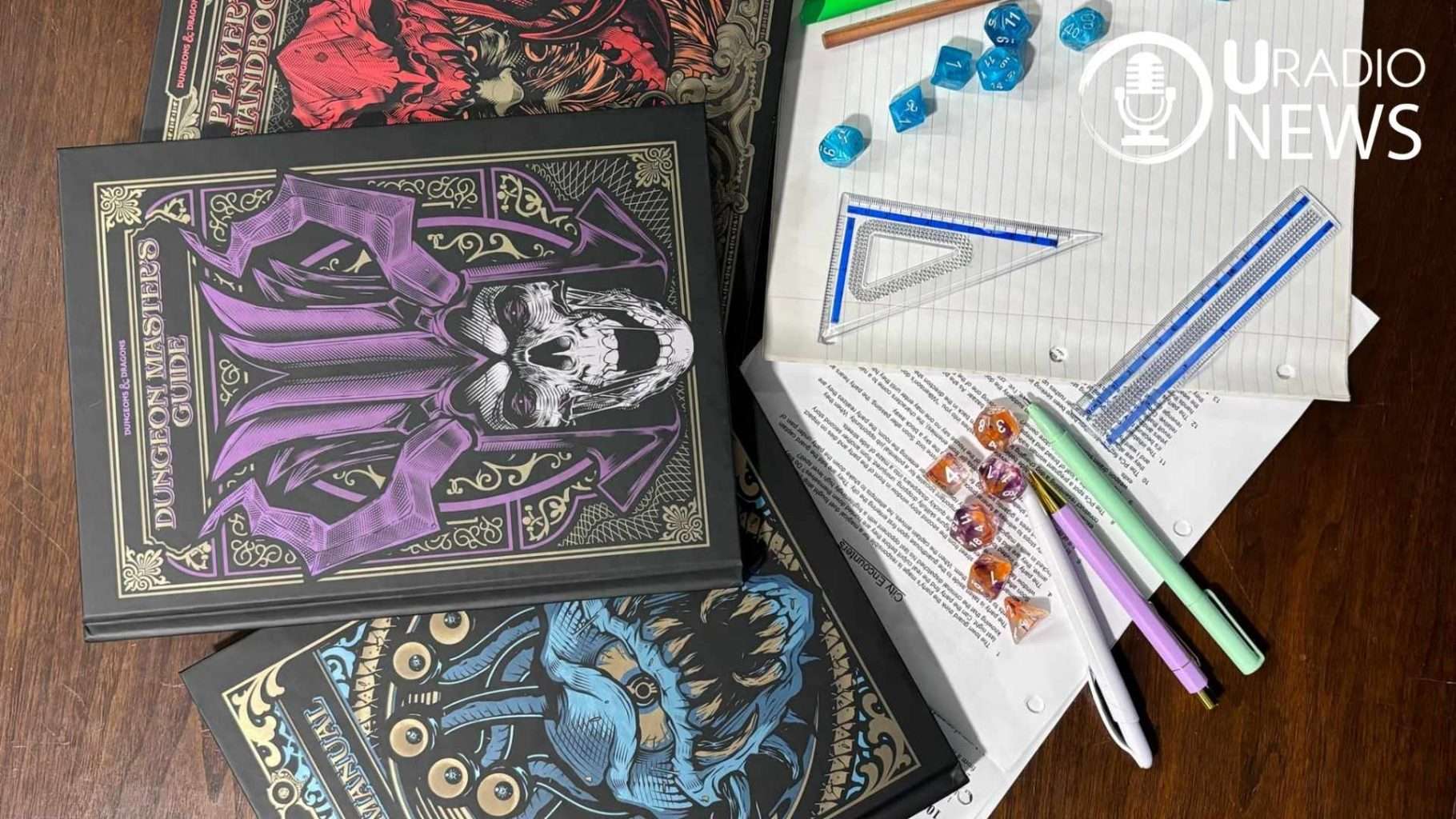
Engaging students in the classroom is both challenging and vital to the learning experience. Two educators within the Winnipeg school system are “gamifying” their classrooms, utilizing components of the tabletop role-playing game Dungeons and Dragons as a tool to explore subjects in a way students are excited to engage with.
Dungeons and Dragons (D&D), a game which has undergone numerous developments since its initial release in 1974, has players explore massive fantasy worlds led by the Dungeon Master, the judge of rules and a guide through various challenges and encounters. Through creative thinking, problem-solving, and a little bit of luck, including dice rolls, players must work together while completing puzzles and social encounters in an experience that brings all around the table to create a story of adventure and heroes together.
Jonah Simmons, a substitute teacher in Winnipeg and one of the foremost knowledgeable D&D educators in the city, has been featured on panels at the Gaming Association of Manitoba Educators and Manitoba Educators conventions on how he integrates D&D into his teaching to enhance student engagement and learning. Simmons also established the Manitoba Educators Role Playing Council, which supports educators in incorporating role-playing games into their curricula and events that teach students how to become Dungeon Masters.
A significant problem Simmons sees in classrooms he subs in is the shift in student-teacher relationships, where students don’t feel their voices are being heard. “Kids will actually be amazed that I’m just listening to their needs.” When bringing D&D into teaching, he’ll take what students have mentioned and integrate characters created by the quieter students into the story’s narrative.
“Giving them that outlet, to where you’ve not only listened to what they’re saying now, but you’ve listened to what they said before and remembered it and are implementing it into the game. That’s a huge way for students to feel engaged in a play environment.”
Curtis Bilewitch teaches grade nine English and runs a D&D club at Sisler High School. The club provides students with valuable creative and social outlets. During COVID, the club shifted online, with Bilewitch receiving appreciation from parents for providing a consistent weekly activity that supported students’ mental health and created a sense of community.
Bilewitch has been a teacher for 28 years, teaching students in kindergarten to grade 12 and almost every subject. For him, D&D and similar games support cross-curricular education by merging storytelling, art, math, and strategic planning elements, preparing students for real-world collaboration and critical thinking. A significant benefit of gamification for student engagement, especially for shy or socially anxious students, is the motivation from a play environment in helping students feel part of a collaborative experience.
They might not want to do a group project with people normally because they’re shy or maybe have a little bit of social anxiety,” explains Bilewitch. “But as soon as you kind of put this game aspect into it, it helps them buy-in. There were a lot of students in my group, and it was funny; I talked to them, and they were in grade nine, and they were shy, quiet little people. Now, they’re like leaders in the school.”
Whether it’s math, science, or English, that buy-in is incredibly powerful and fantastic for helping newcomer students learn, says Simmons. The collaborative environment allows students to practice their English in a fun and interactive setting. Although there are many ESL strategies, one that Simmons has utilized himself is creating a sense of immersion of adventurers in a distant land.
“Often, when the students speak their own language, no matter what role-playing game you’re using, it’s a really great tactic to say that their characters have come to a land where English, or ‘common,’ is the predominant language and that their language is from their land. So they can speak their language to each other, but to interact with the game world, they have to use English, and that gets them to understand English very quickly because they need to interact with the game world using that language.”
Both Simmons and Bilewatch advocate for the gamification of education, believing that role-playing games like D&D are among the best methods to engage modern students and activate their passion for learning.
With a downward trend in student academic performance across the country, an objective look needs to be taken at how students are taught.
Canadian Students and Education
In the 2022 Programme for International Student Assessment (PISA), which assesses the knowledge and skills of 15-year-old students, Canadian students scored above the OECD average in math, reading, and science, with strong performance from top and minimum proficiency students. Canada also showed higher academic resilience among disadvantaged students and smaller socioeconomic performance gaps than the OECD average. Boys outperformed girls in math, while girls led in reading. Immigrant students, despite socioeconomic disadvantages, performed comparably or better than non-immigrants. While performance in reading and math declined since 2018, Canada maintained favourable academic and social metrics, though distraction from digital devices remains a concern.
For the 2024 school year, Manitoba implemented a classroom cellphone ban to reduce distractions. Cellphones will be prohibited during school hours for K-8 students and during class for grades 9-12, though they may be used during breaks and lunch. The belief is these restrictions will effectively boost focus, peer interaction, and reading habits.
School plays an integral part in the social and academic development of young Canadians; new approaches to education are crucial to student success. For Simmonds and Bilewitch, finding that success will take thinking outside the box and taking advantage of all tools available.
For educators looking to implement games into the classroom, he encourages them to contact him through his email, jonahsimmonds@gmail.com, or the Gaming Association of Manitoba Educators.
– Ryan Funk, U Multicultural