










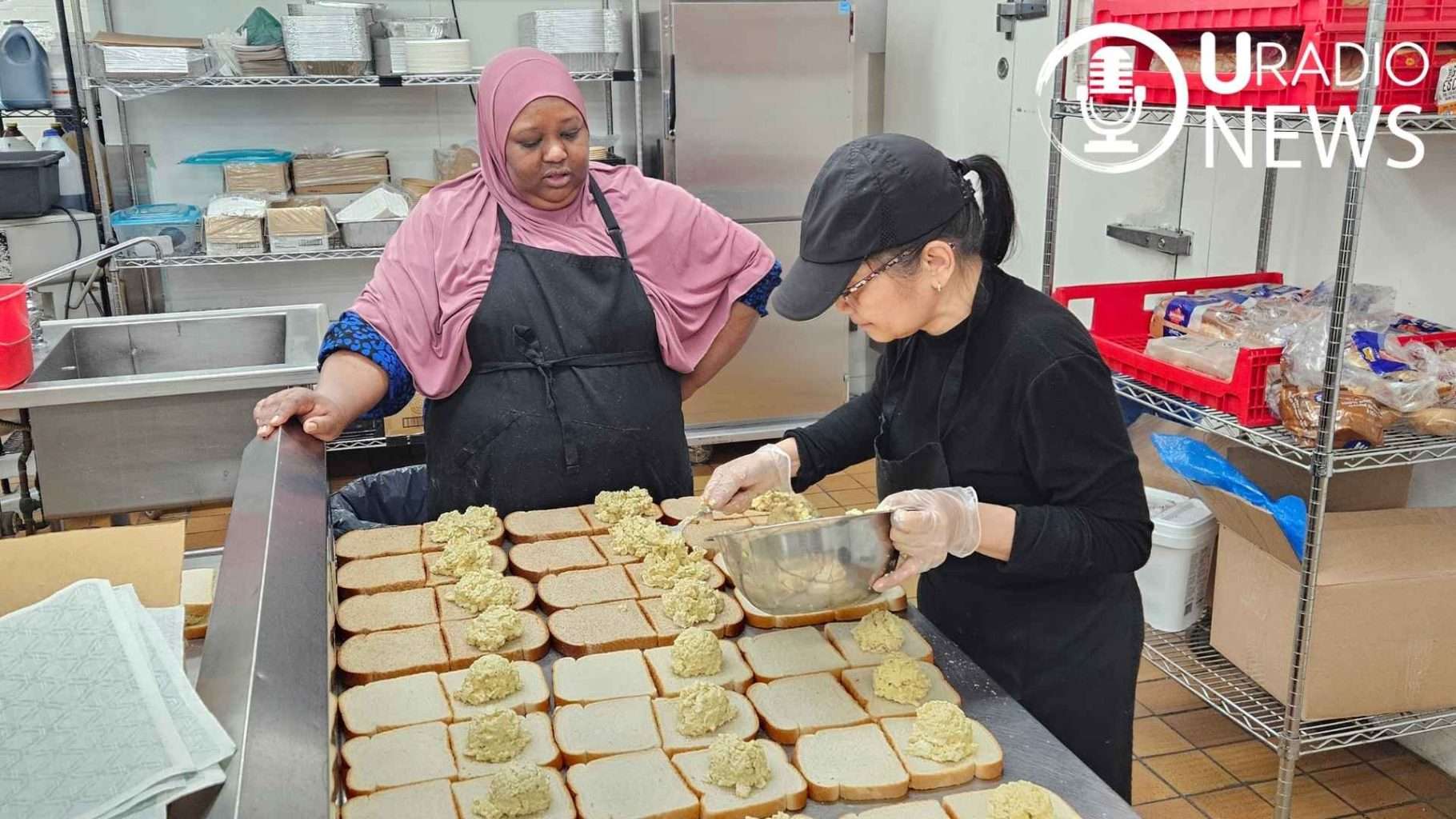
In Winnipeg’s North End, Community Helpers Unite is helping provide food security and community cohesion in and outside the kitchen.
CHU’s executive director, Brandy Bobier, says CHU has stepped outside its comfort zone and began a youth program over the last year, securing funding from the federal Building Safer Communities Fund.
“Because we have contact with a lot of marginalized youth, who come and work in our kitchens, come and volunteer with us for dinner services and things like that, we can see the need for youth to have a space of their own, where they’re welcoming and it’s very inclusive and very non-judgmental and just a nice, chill place to go.”
The location on Jarvis Avenue is open to any youth who needs to come by each Thursday, Friday, Saturday, and Sunday from 6 p.m. to 6 a.m. Bobier says youth are welcome whether they’re in a situation at home where they’re not feeling safe, alone, or simply looking for a hot meal. The location also offers harm reduction supplies, clothing donations, and footwear and provides various programs, including hands-on culinary training, social enterprise projects, and other community engagement activities.
Beyond youth initiatives, CHU plays a crucial role in addressing food insecurity. The organization currently prepares and distributes over 30,000 meals each month, reaching some of the most vulnerable populations in the city.
Lack or insufficient access to food can lead to friction and frustration, and outreach emergency support hampers can aid in those situations. Bobier explains these hampers go to at-risk families through outreach workers, social workers, and public health nurses, often in crisis situations where children might be apprehended. Trained workers can access the warehouse anytime to assemble three days’ worth of food supplies with ready-to-eat meals, fresh produce, and other essentials.
“They can go pick up the food, they go to the, to the house, and then when they get to the door, they’re either going to de-escalate the situation right away because the reason that everybody was at each other, whatever was going on, was because either there wasn’t any food in the house or there wasn’t enough food in the house. If that’s not the case, that offering of food helps them to open up about what’s going on and what other resources they can then give them.”
A significant amount of donated and rescued food is provided to three major food service contracts, including the N’Dinawemak Warming Shelter, which serves 150 residents daily. Leftover food from large-scale meal production and donations from venues like the Canada Life Centre are either rewarmed or repurposed into soups, stews, and casseroles for distribution during community walks. These walks support tent encampments and individuals on the streets, offering both food security and outreach services.
Both staff and volunteers head the community kitchens CHU operates. Executive Chef James Dickson is responsible for repurposing food donations and developing the menus. With various donations coming in every day, he says he always gets to do something new and exciting. Dickson is also responsible for the administrative side of the kitchen and has brought people of diverse backgrounds and experiences onto the CHU team.
“We really have a huge mixing pot of people that come through here, and we employ people from all walks of life. We try to give people the chances that they deserve that they might not be able to get because maybe they haven’t had a job, a solid job, or a good reference to go out into the world and help with that.”
Shyann is a baker at the CHU kitchen. She oversees catering and ensures baked goods are prepared. She also bakes cakes and desserts for N’Dinawemak. Having worked at CHU for over a year and a half, Shyann says her position has helped her become more community-minded.
“It just feels really great to be able to do good for the community when the world feels so dark. Sometimes I come here, and it’s like a whole other environment, and it’s loving, and it’s peaceful, and everyone’s so warm and welcoming, and it makes you feel so good about yourself, and it makes you feel like you’re wanted like that. You want to be here, and it doesn’t just feel like a job; it feels like something you’re really proud to do.”
Collaboration is the core of CHU’s mission. The organization works with grassroots groups, non-profits, and social enterprises to amplify their collective impact. One example is CHU’s partnership with the Equal Housing Initiative, which provides kitchen space for EHI volunteers. Michael Minor, a volunteer with EHI, says these partnerships go a long way.
“This is exactly what’s needed in Winnipeg,” explains Minor. “We don’t have any kitchen space. We don’t. There’s no way that we could prepare food for that number of people without using their space. And, and it’s it’s hard. It’s a tight space. It’s hard to work together and hard to find enough fridge space. All of these things are challenging. But there’s no other way that we’re going to be able to meet the needs that are in our community unless we work together and kind of work through the challenges as they come along.”
Key to ensuring the work between CHU and other organizations is the utilization of people’s lived experiences. Bobier explains these individuals are those who have gone through food insecurity, ended up in gangs, or have gone through addiction programming and can take what they have experienced and learn to help others going through something similar.
CHU is an Indigenous-led organization with an Indigenous board. Many managers and coordinators identify as Indigenous, and approximately 50- 75 percent of the staff are also Indigenous. Bobier, though not Indigenous, has long relied on the North End’s Indigenous community, emphasizing the importance of elders, aunties, and uncles in youth programming and community healing.
“We have a couple of knowledge keepers we’re working with who are going to run sweat lodges. We’re going to learn how to build a sweat lodge and do some gardening. We’re planting medicines in the spring on a piece of land we just got a hold of. There are a lot of new things on the go, and I hope for more engagement from youth so that we can get them to feel like they have a community around them.”
With the need for food services continuing to rise in Winnipeg, Bobier says they are dedicated to bringing community and organizations together in the North End to support everyone they can.
– Ryan Funk, U Multicultural