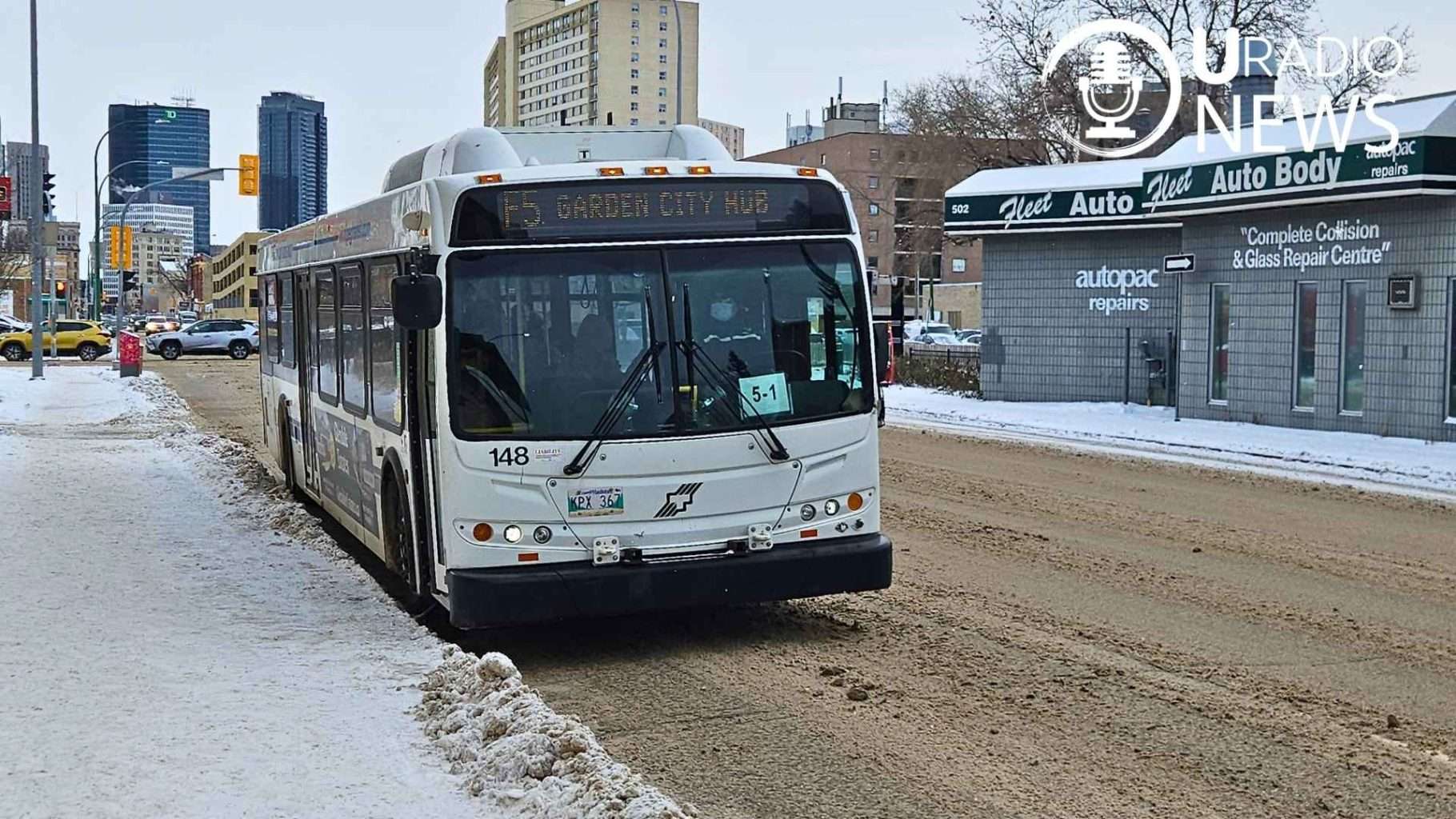
Winnipeg Transit riders are seeing another round of changes as the city transitions into its winter schedule, following the launch of the Primary Transit Network earlier this year. With snow arriving and commuters adjusting to new travel patterns, both transit officials and advocacy groups agree the system is in a critical adjustment phase.
Kyle Owens, president and chair of Functional Transit Winnipeg, says the growing frustration highlights just how essential transit is for tens of thousands of residents. “We are seeing the full effect of how important and essential transit is to so many people and how crucial, above all, reliability is, because I think that is the story that runs through so many people’s frustrations and opportunities and just obstacles to really using that transit service.”
Functional Transit Winnipeg is a non-partisan volunteer advocacy group focused on improving public transit by amplifying the experiences of people who rely on it every day.
The Primary Transit Network, which launched back on June 28, was the most significant overhaul of Winnipeg’s transit system in decades. According to Bjorn Radstrom, Manager of Service Development at Winnipeg Transit, the redesign required rebuilding routes and schedules from scratch. “It’s a brand new network, we have to go through and recreate everything. And I’ll be honest, for the most part, we got it right, and most of the service is operating pretty well. But we missed the boat on three routes in particular.”
Routes such as D12, D13, and D16 experienced chronic delays. Another challenge was that some feeder routes had too much time in their schedules, leading buses to have to stop and kill time partway along. “So the buses will still get people to their destination on time. There’s nothing more frustrating than walking down the street, and when you’re 50 metres at the end of the block, you see your bus fly by because it was two minutes early.”
Owens agrees the redesign was long overdue, describing it as a necessary reset rather than a finished product. “This is the first true ground-up rewrite of Winnipeg Transit since the trolley system was dismantled,” he said. “It was desperately needed. But it’s important to understand this was an emergency foundation repair. It’s not a fancy new house. It’s the same house with the same problems, it just isn’t sinking anymore.”
On Sunday, December 14, Winnipeg Transit’s winter schedule expanded On-Request service in 10 zones, extending service to about 2 a.m. on weekdays and Saturdays, and to 12:45 a.m. on Sundays and holidays. Additional capacity has been added to overcrowded routes, school-focused trips have been adjusted, and more late-night fixed-route service is planned for April.
While Winnipeg Transit says the new “spine and feeder” model has nearly doubled the number of residents within walking distance of frequent service, it has also eliminated many one-seat rides. That trade-off has been difficult for some riders, particularly those who previously benefited from direct routes.
“There was bout five per cent of Winnipeg who had the biggest advantage under the old system, had a really sweet setup where the bus would get them door to door from where they lived to where they went to work, and where they wanted to shop,” Owens said. “It really worked for them. And the new system, although it has more buses, offers more service. It is a faster service. Overall. It would have broken their sweet setup, and they would have been told, well, there’s more service. All you have to do is transfer what turned out to be a nine-minute. That’s right. Before, it was one bus trip and a transfer; now it’s 35.”
Radstrom says that much of the feedback Winnipeg Transit receives highlights the difficulty of transfers under the new model. While the redesign nearly doubled the number of residents within a short walk of frequent service, it also meant some riders lost direct, one-seat trips. Transit is now working to improve the transfer experience through better scheduling, clearer trip-planning tools, and gradual redeployment of bus shelters. About 60 to 70 new shelters are expected to be installed next year.
Owens warned that winter conditions could intensify dissatisfaction, especially as transfers become colder and more physically demanding. “We’re a winter city. And if the system is only designed to work well in summer, then it doesn’t really work at all, does it? The system has to be designed to work like days like today, where it is -29 with windchill. Bus shelters are crucial infrastructure. And the fact is, if Winnipeg Transit is anticipating well, you know, let’s manage expectations on being sheltered, then they’re setting themselves up for failure.”
Radstrom says Winnipeg Transit notes that placement depends on space, safety considerations, and negotiations with private property owners.
“It’s not as simple as just deciding to put a shelter somewhere,” Radstrom said. “We have to make sure there’s enough space, that it doesn’t block sightlines, and in some cases, we need permission from private property owners before anything can move forward.”
Underlying many of these challenges, Owens says, is chronic underfunding. He continues to call for a return to a 50–50 funding agreement between the province and the city, which previously split transit operating costs evenly. “The old system was underfunded, so the new system is underfunded too,” he said. “Without dedicated, stable funding, we’re just rearranging the same limited resources.”
Ridership trends are also a concern. Winnipeg Transit data shows ridership at about 95 per cent of pre-pandemic levels in 2024, dropping to roughly 89 per cent in 2025. Owens expects winter conditions could push those numbers lower. “People will only tolerate long, cold waits for so long,” he said. “Frustration accumulates, and eventually, people give up.”
Both Owens and Radstrom emphasize the importance of rider feedback. Winnipeg Transit encourages detailed reports through 311 to help planners identify specific problem areas. “We want to hear your feedback. So keep sending us things to 311. The other thing is that we are really working to improve things. We knew that with this giant network change, it was not going to be perfect right out of the gate. But this network transition gave us a really solid base to build on.”
“This is one of the rare situations where complaining does help,” says Owens. “You want to help Winnipeg Transit, help the city understand that transit is a crucial issue. It changes your life when you have real service, for the better. It changes your life for the worse when you lose real service, and you have to find another way to get around.”
As Winnipeg’s transit network continues to evolve, this winter may prove to be a defining test, not just of new routes and schedules, but of whether the city and province are willing to fund the system at the level riders need.
– Ryan Funk, U Multicultural