






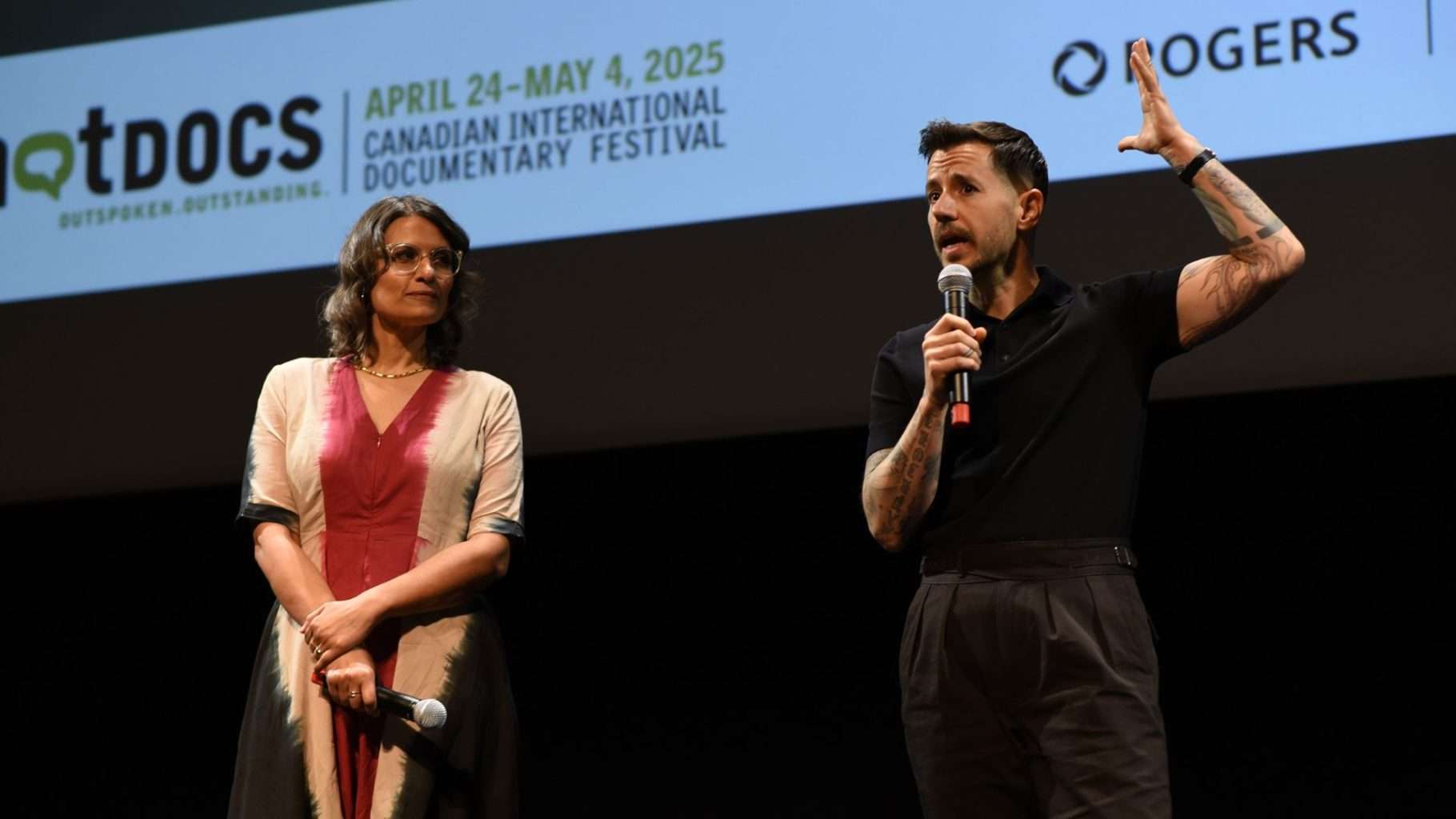
Hot Docs Toronto has been celebrating independent documentary filmmakers since its incorporation in 1993. This year, Winnipeg and Manitoba made their mark on the festival.
Programmers at Hot Docs went back 10 years and did not find a year with more than one “Winnipeg-connected feature.”
“It’s been an exceptional year to have three feature films featuring unforgettable subjects from across Manitoba,” says Alex Rogalski, Senior Canadian Programmer at Hot Docs. “Each of the films has such a unique voice. Hot Docs has always been a champion of great documentaries from across the country, and we’re excited to share these stories with our audiences.”
Two films tell stories from the prairie province: Endless Cookie and Agatha’s Almanac. Two are directly connected to Winnipeg, with The Nest and Parade: Queer Acts of Love & Resistance.
Written and directed by award-winning writer and filmmaker Chase Joynt and Julietta Singh, The Nest uncovers 140 years of history of Singh’s childhood home in Winnipeg, recentering that history on the women who lived there.
“It was definitely very generative,” explains Singh, who experienced her home through new eyes, returning as an adult after many years. “And one of the ways that I have thought about the film is not as necessarily stripping away colonial history, but rather displacing it, putting it, putting it in its position rather than allowing it to kind of reign as the dominant narrative of a place or a nation. So, for me, situating it alongside a series of other world views and a series of other political histories, often in opposition to that central colonial history that we’re told as Canadians, was really important.”
With a home steeped in history, both Singh and her mother spoke of lingering presences, the sense that those who once lived there had never truly left. Singh’s mother even recalled once pulling up floorboards and feeling a hand gently pressed against her back.These weren’t sinister encounters, but a maternal and protective energy woven into the house.
Joynt, though not tied to the home personally, described a different kind of presence. While he didn’t feel spirits in the traditional sense, his connection came through Singh’s memories, which shaped how he saw and experienced the space.
“I came in with such a deep understanding of Juliette’s experience that, in some ways, the things I was feeling were the stories I knew from her… I was encountering spaces, already understanding some of the context of my upbringing or familial experience. And so I was thinking with those as we were building our film, because not only is the film stitched to Juliette as POV in the form of a kind of voiceover authorial move, but also the ways in which she traversed that space as a child and the ways in which she returns as an adult.”
The women whose histories inhabit the home span a wide range of identities, Japanese, Deaf, Métis, Indigenous, and Irish, among them Anne Bannatyne, a Métis woman and influential figure in the history of the Red River and Winnipeg. Singh calls them her “brick and mortar kin” and hopes to honour their legacy by adding her mother’s story to theirs, remembering the past while contributing to it.
“I think, looking forward 100 years, you know, in some really important way, I hope the film is a contribution to, a way of understanding or regenerating place. And I hope that as a teacher, mother, and daughter, I’m helping to forge other ways of being in a community with people who are precisely unlike us.”
Directed by Noam Gonick and produced by Justine Pimlott, who also produced The Nest, Parade: Queer Acts of Love & Resistance takes a look at history and the parallels to today. Gonick recalls looking through photos from the 70s, with gay rights activists standing under the pillars of the Manitoba legislative building, grounds revisited in 2023 during protests targeting trans youth.
“We filmed against those very same pillars, during the Million March for Children, which was an anti-trans march, and also filming the counter-protest by all the trans and queer people in Winnipeg on the same location in front of that same legislative front. It was quite incredible to watch that 50-year arc of time right in front of your eyes.”
Telling these stories is part of Gonick and Pimlott’s DNA as Winnipeggers and activists. The documentary doesn’t pull its punches, revealing the violence and discrimination gay and queer activists have had to endure for their rights. Pimlott says many of those early protests dealt with firsts. They had no human rights. They could lose their jobs, or they could be thrown out of their apartments.
“So it’s a very different climate, one in which we actually have protections and people are trying to take them away. That was when there was nothing. So those risks that people were taking were enormous. And I think it’s really important to know and celebrate and give flowers to all of those incredible queer elders who shoulders we stand on, and now we’re back. But we still have those rights and must fight to protect them.”
That fight, to protect hard-won rights and honour those who risked everything, continues today, not just in policy but in the stories we tell. It’s why focusing on Indigenous perspectives, like those of Two-Spirit people, whose very name was born here in Winnipeg in the 1990s, is the core of these conversations. These stories remind us that queer history varied, layered with the experiences of Black, Asian, Indigenous, and other marginalized communities.
Through archival footage and deeply personal interviews, both The Nest and Parade: Queer Acts of Love & Resistance shine a light on different chapters of history, each showcasing Winnipeg from angles many haven’t seen.
As with many National Film Board of Canada projects, the journey of these films isn’t over. Festival and community screenings are planned, including right here in Winnipeg, and both films will become available to stream for free on the NFB’s platform.
– Ryan Funk, U Multicultural