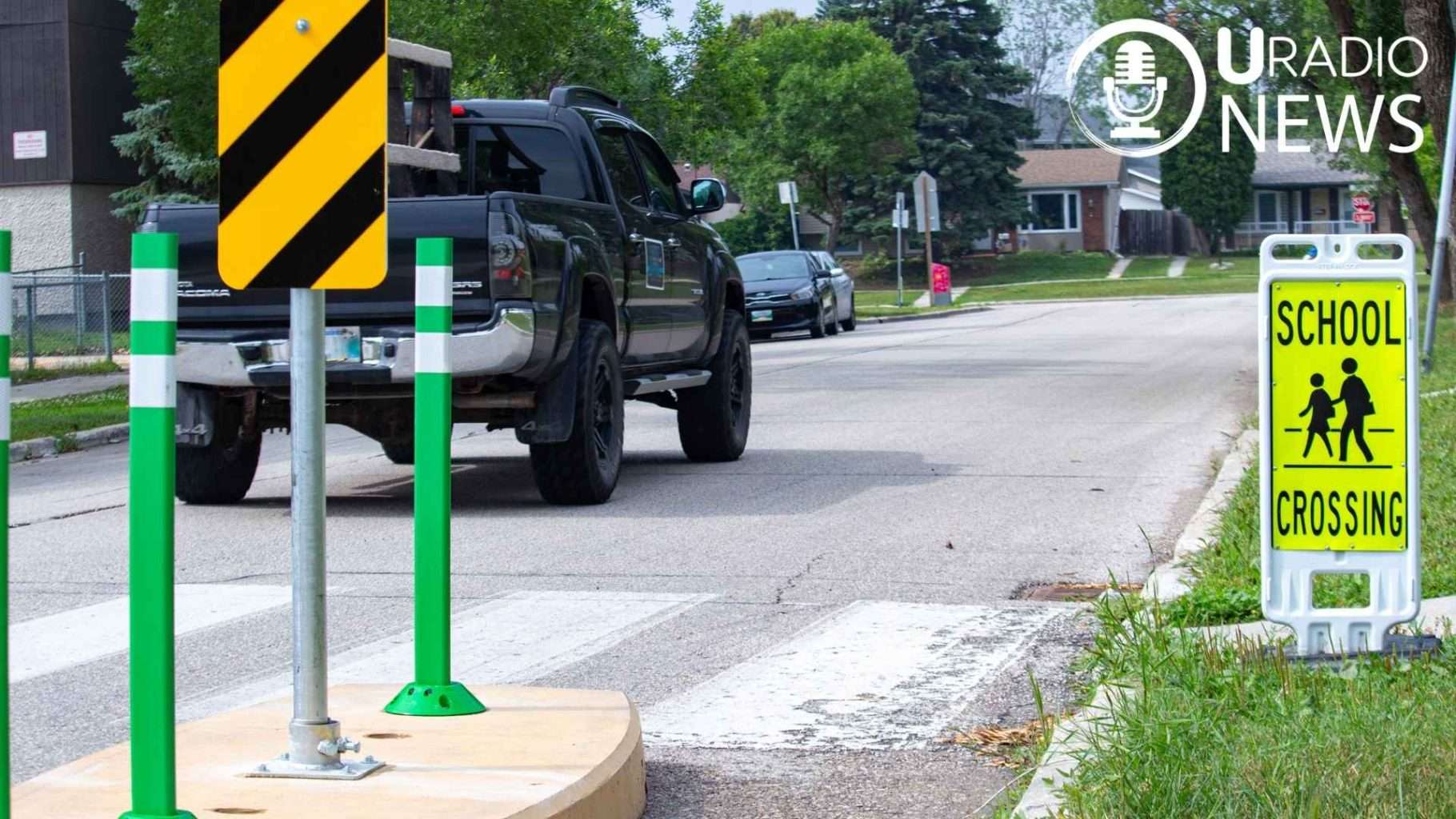
The City of Winnipeg is adopting a new approach to managing traffic speeds in high-risk areas.
According to Amanda Pushka, the road safety management engineer at the City of Winnipeg, these traffic quick-builds provide a better understanding of how traffic flow can be affected. These quick-builds, utilized by cities across Canada, avoid the significant time and money investment in designing and building permanent infrastructure.
“We can put these curves in and change the road environment in a really fast way. This helps us act quickly when we identify problem sites in our road network, as opposed to where we would undertake permanent construction. Every Winnipegger is familiar with construction season in the city. This allows us to throw in curbs and change the built environment in an afternoon.”
She says that a number of problem sites have already been identified, with quick-builds to be implemented in these areas over the remainder of 2025 and throughout the following year. One of the most recent, installed in the week of July 21, was two curb bump-outs on the school crosswalk on Chancellor Drive. This design, known as a chicane, both shortens the crossing distance and narrows the roadway, naturally slowing down traffic.
Along with the curb bump-outs, other curb designs include:
Pedestrian Islands
Create a safe stopping point in the middle of wide roads for pedestrians and cyclists, allowing for a two-stage crossing.
Help slow down vehicle traffic.
Improve visibility of crossing areas for drivers.
Corner Radius Reductions
Tighten corners so vehicles must turn at lower speeds.
Reduce the risk of collisions between vehicles and pedestrians.
Road Narrowing
Use medians and curb extensions (bump-outs) to visually and physically narrow the roadway.
Encourage drivers to reduce speed and increase pedestrian safety.
Although the city hasn’t received much feedback from these quick-build designs, what Pushka says she has heard has been positive.
“I have received several requests for more installations and other neighbourhoods in the city,” says Pushka,” and a lot of city councillors like to see the quick, rapid response to safety concerns.”
One potential concern with these temporary installations is how snow removal crews will interact with them come the winter months. However, Pushka says they’ve considered that. Due to their size and weight, these installations are capable of withstanding snow removal, and the city will be closely monitoring them.
“Those are conversations we’ve had with many other snowy Canadian cities about how they handle that. We are working closely with our street maintenance team, as I mentioned, to try to figure out what sort of cross-section and how that works for their equipment. And again, that’s what we’re really monitoring this winter.”
She says that, as a pilot, this program will help the city better understand how well this type of installation performs in various locations. Future implementations will be focused on schools, multi-use path crossing locations, and residential areas. Pushka adds that based on the data they collect, these locations could become future permanent infrastructure projects.