










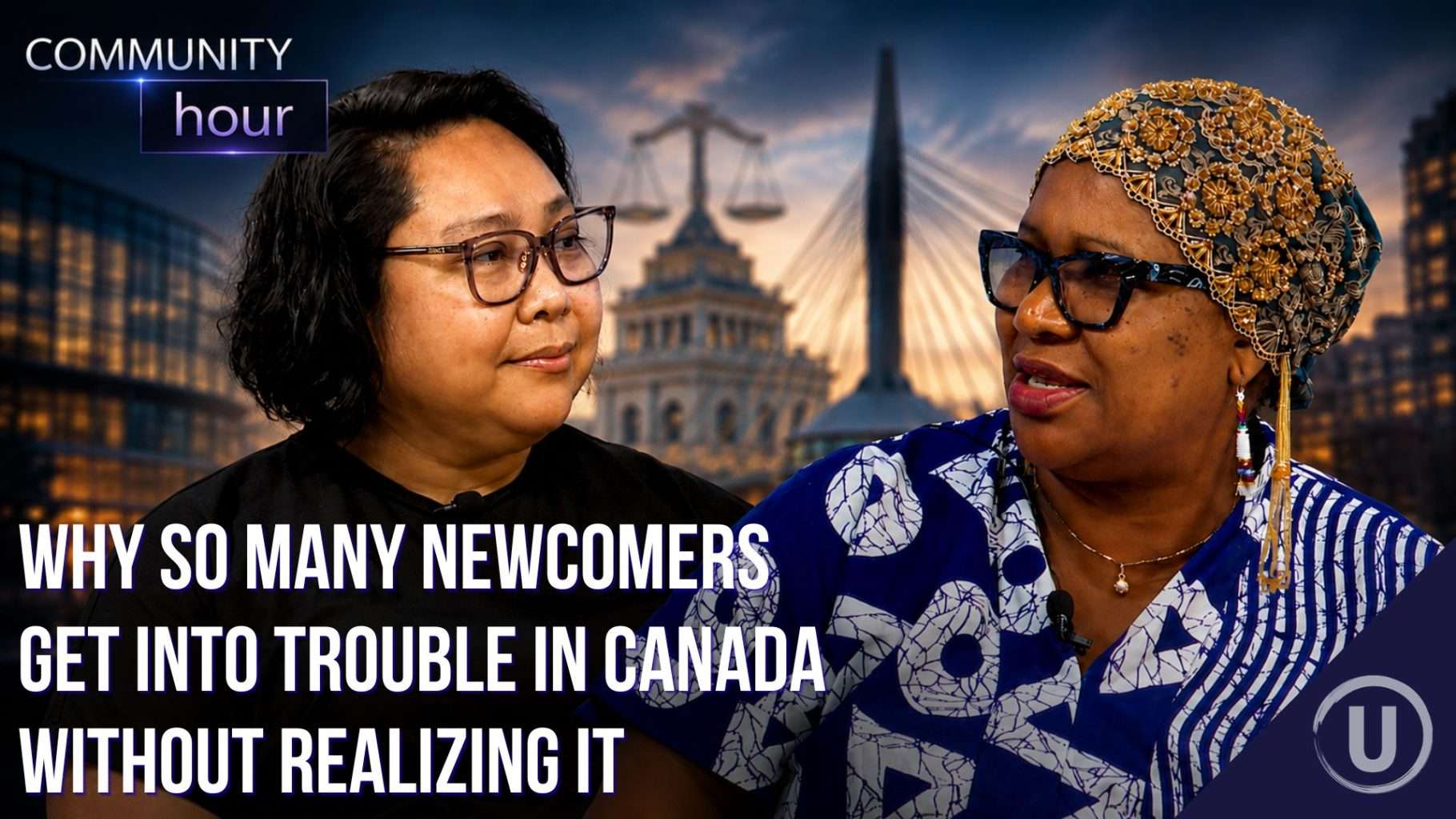
On a recent episode of Community Hour on the U Multicultural Channel, host Florence Okwudili sat down with Kriz Cruzado, a mediator with Mediation Services Winnipeg, for an insightful discussion about conflict resolution, restorative justice, and the challenges facing newcomers to Canada.
The conversation began with an important reality: conflict is unavoidable. According to Cruzado, disagreements and misunderstandings naturally occur within families, neighborhoods, workplaces, and communities. The key is not avoiding conflict altogether but learning how to manage it constructively before relationships break down.
A major focus of the interview was the immigrant experience. Cruzado explained that newcomers often arrive in Canada focused on housing, employment, education, and survival. As a result, many do not have the opportunity to fully understand Canadian laws, cultural expectations, or available support services. This can sometimes lead to misunderstandings or legal issues, particularly for international students and newcomers who may not fully understand the consequences of certain actions.
The discussion also explored the emotional side of immigration. Cruzado shared that adapting to a new country can involve losing parts of one’s cultural identity while learning to navigate a different social environment. This process of acculturation can create stress, resentment, and tension within families, often contributing to conflict.
Florence Okwudili highlighted how many immigrant communities traditionally rely on elders, religious leaders, and cultural networks to resolve disputes. While these systems remain valuable, Cruzado emphasized that professional mediation can provide a neutral environment where all parties are heard and where lasting resolutions can be developed.
Viewers also learned about the work of Mediation Services Winnipeg, including court diversion programs, restorative justice initiatives, family mediation, divorce and separation services, community dispute resolution, and conflict resolution training. These services are designed to help individuals understand each other’s perspectives, repair harm, and rebuild trust.
One of the strongest messages from the interview was that effective conflict resolution begins with listening. Cruzado noted that many people struggle to hear opposing viewpoints when emotions are high, making mediation an important tool for productive dialogue.
The episode ultimately reinforced the idea that strong communities are not communities without conflict but communities that possess the skills and resources to resolve conflict in healthy and constructive ways.
https://youtu.be/bvOzUjQ7N-k?si=H-Hc2AahSXYl5mGs
Yuliia Kovalenko, U Multicultural.