


Five years ago, Cynthia Drebot never would have imagined that they would have to put up a fence on the property of the North End Women’s Centre (NEWC).
Drebot, the centre’s executive director, says the fence, which went up on Friday afternoon, is to help secure the location after instances of vandalism, theft, and arson.
“People may remember that we had a fire at the front of our building about a year ago now, I think it was. And that fire, luckily, was stopped before it got too far into our building. But it did take our front door out of commission for three months while all the different parts of the front entrance and vestibule area had to be repaired.”
Other incidents have included dismantled garden boxes, stolen wood, smashed windows, and multiple air conditioning units stripped for parts. One of the most recent acts of vandalism that occurred over the weekend of May 24 struck an emotional chord.
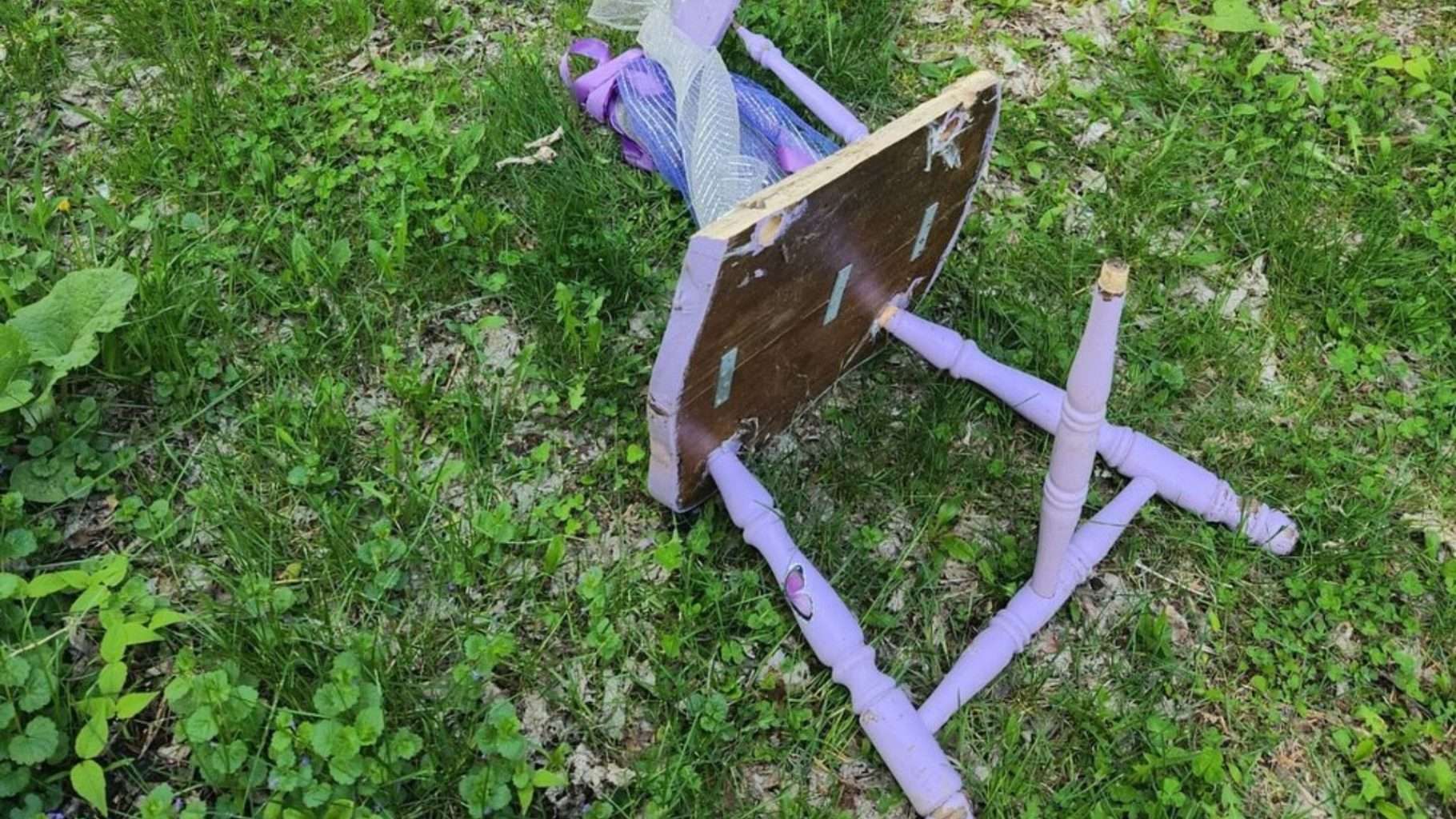
“One of the saddest parts was that we have an overdose awareness garden in the back, and we have a purple chair representing a family member with a picture on it who was lost to overdose. And that chair was broken and vandalized.”
The chair, the window, and the last remaining air conditioning unit were damaged during that weekend.
Over the past two years alone, the centre has sustained over $30,000 in damages. Drebot says the centre has to absorb these costs directly which diverts funding from essential services, such as food, hygiene products, and programming.
“We’re a not-for-profit with multiple buildings and the location that we’re in, being on Selkirk Avenue, and our premium is quite high. So, if we have an incident, it needs to actually exceed $10,000 for us to consider it worth filing a claim because our deductible is $10,000,” explains Drebot. “If we get a claim, then our premiums go up, you know? So it’s that whole we’re stuck in this really challenging loop of the cost of the vandalism, the fire, the arson that we had, that was an insurance claim. So because of that, we’re now in a position where it’s very difficult for us to be insured.”
Growing security concerns, especially over evenings and weekends when fewer people are around, forced the difficult but necessary decision to install the fence.
“We didn’t want to put up a barrier because we try to be a low-barrier place. But the barrier now, I think, is going to create more safety for the people that live with us. They were very, very happy to hear there was a fence going in. Actually, super excited. Felt like it would feel much safer for them.”
Beyond preventing further damage, the fence will allow NEWC to offer more outdoor programs, especially during warmer months. Their property includes green space and gardens, and with the added security, it can once again become a space for healing and gathering.
The installation also symbolizes the unfortunate reality of the community grappling with rising homelessness, addiction, and a shrinking stock of affordable housing. Drebot points to systemic issues such as the loss of thousands of social housing units in Winnipeg over the past decade, rising rents, and inadequate support for those living in poverty or with mental health and substance use challenges.
“Because for folks that need supportive housing, but if it’s not available, then you have people who are living unsheltered. When you don’t have your basic needs met, you do things to have your basic needs met.” She says she understands why these instances at the centre have been happening, but something had to be done. “It all makes sense to me why it’s happening, and we don’t judge it at all. But we have to do something to secure our spaces.”
The damage the NEWC has endured has sparked greater awareness about the broader need for inclusive programs that address people’s basic needs.
Regarding the installation of the fence, the response to the announcement has been largely supportive. Community members have donated to help offset the estimated cost of $11,000 to $15,000. Plans are also underway to collaborate with local artists and residents to decorate the fence, creating a friendly reflection of the community.
– Ryan Funk, U Multicultural


