For many organizations, there’s always the wonder of how to prepare for the future. The University of Manitoba is taking a proactive approach in those preparations, releasing its Capital Project Plan, Building Bold.
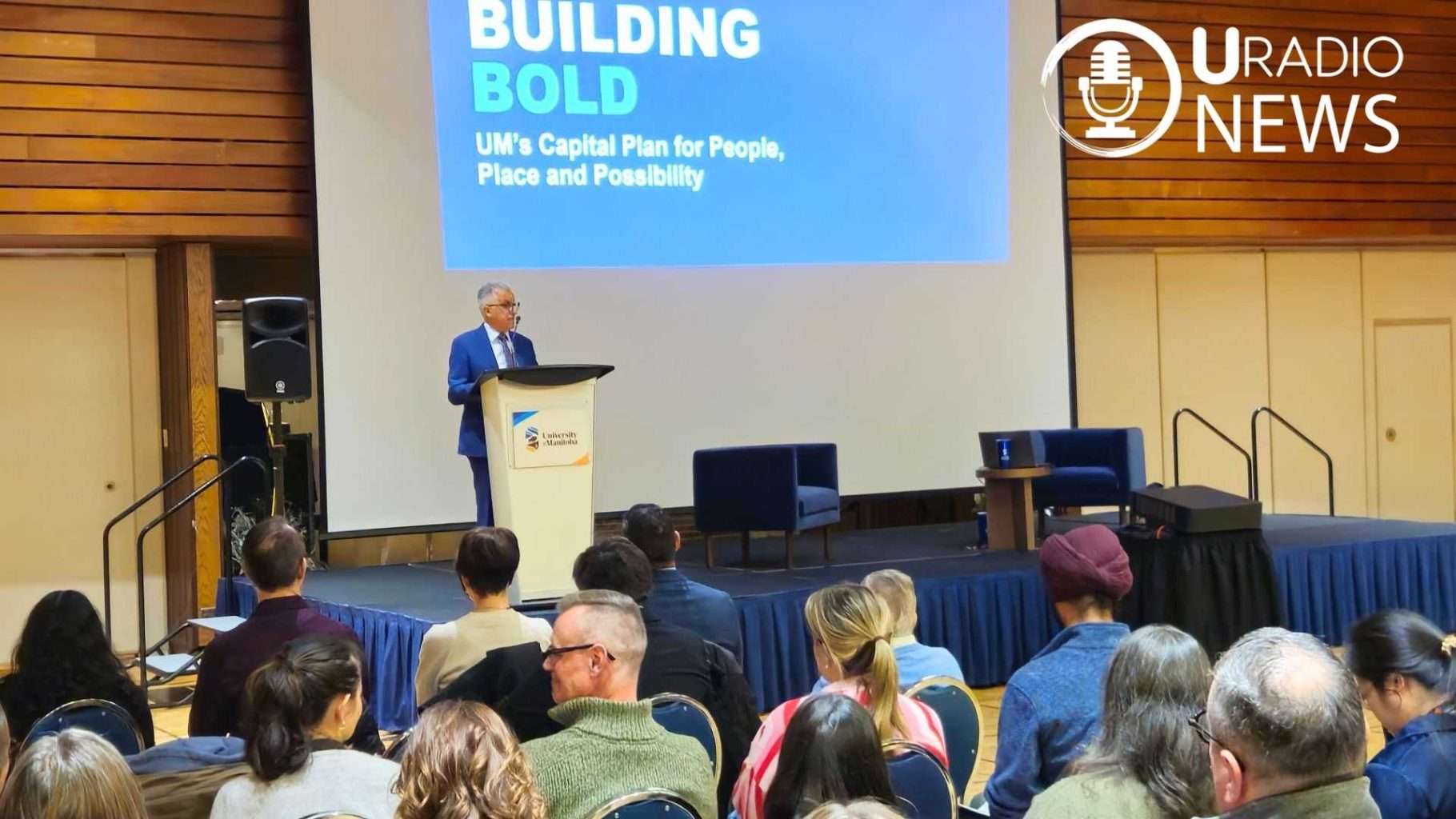
Hundreds gathered last Tuesday at the UMSU University Centre, where university leaders outlined how the institution could change over the coming decades. The plan was announced by University of Manitoba President and Vice-Chancellor Michael Benarroch and Vice-President (Administration) Raman Dhaliwal, who described Building Bold as both visionary and grounded in practical realities.
“It feels great,” Benarroch said of the packed room. “It feels that our community is engaged in this process, which is what we want. And excited about it, wanted to hear about it. I hope everybody leaves feeling excited about what’s possible for the University of Manitoba in the future.”
Building Bold addresses many pressures facing the university, growing demand for enrollment and research space, aging infrastructure and deferred maintenance, and the institution’s ongoing commitments to sustainability and reconciliation. Deferred maintenance across the university is roughly $600 million. Dhaliwal explained that a key step in tackling that figure was the creation of a comprehensive facility condition index, an audit of all 155 buildings spread across more than 600 acres.
“We use a facility condition index as a way of keeping track of what’s happening within our facilities, and if we’re falling behind with our deferred maintenance,” explained Dhaliwal.
Deferred maintenance refers to repairs and renewals delayed by funding constraints. Having a complete picture allows the university to plan more effectively rather than react to crises, as it previously lacked a clear view of its infrastructure needs.
“Without having a comprehensive picture of our needs, we were being reactive instead of proactive,” added Benarroch. “By being proactive, we feel that we can make better decisions.”
The plan also makes the university more attractive to developers, contractors and funders by clearly outlining long-term priorities. With clearer direction, projects can be planned and financed more efficiently, helping the university compete for limited funding.
Three projects anchor the early stages of the Building Bold plan with the Fort Garry and Bannatyne campuses as well as satellite locations across Manitoba, including the William Norrie Campus, Smartpark, Glenlea Research Station, and the Churchill Marine Observatory. Dhaliwal said the goal was to ensure the plan reflected the full scope of the institution.
“We wanted to show this as a capital plan for the entire University of Manitoba. And we’re not a university without all of those campuses included,” she explained. “We wanted to ensure that whatever we put forward addresses all of our needs across all of our campuses. And it was holistic in that way.”
Key projects highlighted under Building Bold include the replacement of the Elizabeth Dafoe Library, a new agriculture building to replace the aging Ellis research labs, and major redevelopment at the Bannatyne campus, including the Dr. Gerald and Reesa Niznick Centre.
“The Elizabeth Dafoe Library replacement project isn’t just replacing the library. It’s much more than that,” Dahaliwal said, noting the need for updated classrooms, technology, and gathering spaces. “Our students need more space to gather and come together. And so all of those needs have come to the forefront. And we use that information in our planning for this new building.”
The project is expected to reduce deferred maintenance by $58 million.
Student leaders welcomed the focus on student needs. UMSU President Prabhnoor Singh said the plan reflects feedback students have shared for years. “Glad to see that the university is taking feedback from students,” Singh said, highlighting the need for more study space, access to technology and large multi-purpose areas where students can host events and conferences.
The replacement of the Ellis Building will reduce deferred maintenance by another $28 million. Benarroch said the project builds on the university’s roots. “We started as an agricultural college,” he said, “we’ll open those opportunities for them to continue to advance agricultural education in Manitoba, but also move us to the forefront of research.”
Bennaroch explains that prior commitments of sustainability and reconciliation were crucial in the development of the plan. All new developments will involve Indigenous architects from the earliest design stages, and new spaces will include areas for ceremony and smudging. “We’ve made a deep commitment to reconciliation,” Benarroch said. “If our university doesn’t reflect our community, that community isn’t going to feel welcome. We want them to be a part of it, we want them to help us plan, for what the university is going to look like.”
On the sustainability front, Dhaliwal said the plan is an investment in the future. “We’ve made this commitment to achieve net-zero greenhouse gas emissions. 30 years from now is a long time, but the decisions we make with capital today have an impact.” The plan also deliberately considers what should and should not be built. She joked that the team often said, “The greenest building is the one you don’t have to build.”
While the full vision could take decades to realize, both Dhali and Benarroch stress that Building Bold sets a clear path forward.
– Ryan Funk, U Multicultural