


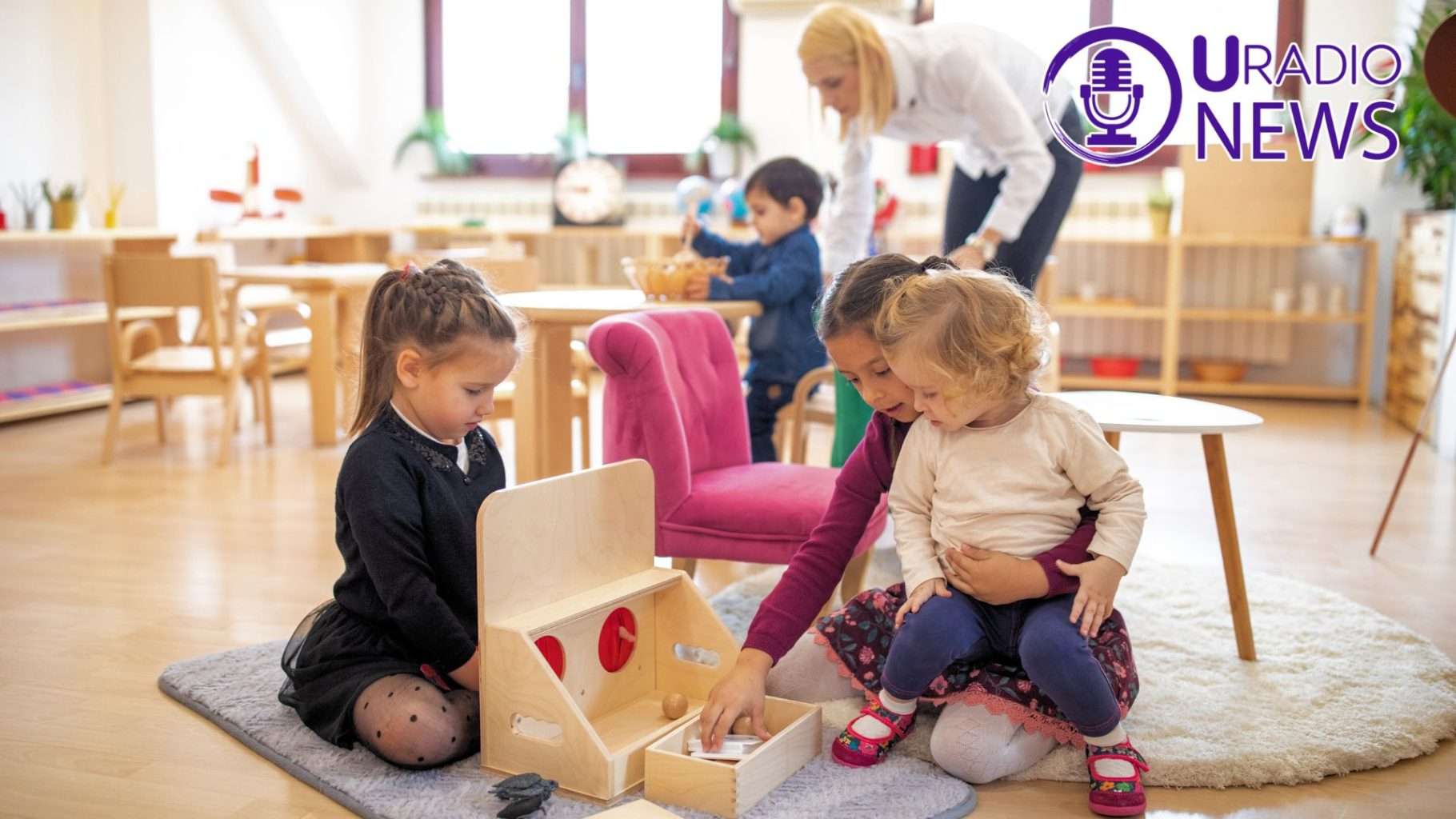
“Recognizing that the important work that ECS (Early Childhood Services) does every day sets the trajectory of development for children for years to come.” That was Jodie Kehl, Executive Director of the Manitoba Child Care Association. “Why not invest in the early years.”
Early learning and child care have long been a vital topic of discussion, but it has gained even greater prominence. Everybody relies on or knows of someone who relies on child care.
“Although you may not have children or my child has aged out of child care, if I can’t access other services in Manitoba, if I can’t go see my doctor, health care, education because those professionals need access to child care, then it does impact my life as well.”
Manitoba has been working to improve accessibility for child care, with the implementation of $10-a-day child care in 2023. Affordability has allowed more people to enroll their children. However, despite the province committing to building 23,000 new child care spaces, demand has outpaced development.
Cheylynne Wolgemuth is President of the South Osborne Child Care Coalition, a group founded in 2024 to advocate for child care in their neighbourhood. Over the past year, Wolgemuth says they’ve seen how waitlists have ballooned.
“At one of the child care centres in the neighbourhood, Riverview Montessori, they have approximately 175 to 200 children on their waiting list. And then Riverview Ashland Child Care Center. They have over 500 children on their waiting list for their programs. That’s for their regular child care program.”
A newer forest nursery program already has 180 children waiting for a spot. To address some of these short-term shortages, the South Osborne Child Care Coalition has proposed innovative ideas, such as using empty classrooms in Winnipeg School Division (WSD) buildings for child care. They recently met as delegations at the WSD Board of Trustees Meeting, asking about classrooms at Ashland School.
“In the last year or two, Ashland School at 170 Ashland Avenue has had some vacant space. So, the Winnipeg School Division was running programming out of there previously. The building was full until about a year or so ago. However, now there’s vacant space, and there are four classrooms that are kind of empty. And two of those four classrooms are used periodically for training, from my understanding. But besides that, they’re sitting empty most of the time. And then the current child care facility within that building, the Riverview Montessori, operates about half of the building.”
These spaces would require only moderate renovations that would be funded through government grants.
“Ideally, the type of renovations that would take place would be installing a bathroom and sink, as well as small kitchenette facilities, in those rooms. It would just make it a lot easier from a childcare perspective. For the children to use the bathroom facilities without the educator having to take a group of eight children at one time down the hallway to all use the washroom and then go back to the classrooms.”
They’re also exploring the possibility of adding a portable childcare unit on the school property to support infant care, which requires specific fire safety systems like sprinklers that would be too difficult to retrofit in an existing space.
U Multicultural followed up on this request and received a response from Clayton Bodkyn, WSD’s Secretary-Treasurer.
“We appreciate the South Osborne Child Care Coalition’s advocacy and support their vision of more child care spaces in the community. This process involves a thorough assessment of the Ashland School building to ensure all necessary safety and operational standards are upheld. As part of this work, we are also collaborating with our partners at the Department of Education and Early Childhood Learning to explore solutions that will help increase childcare availability in the area. At this time, there are no further updates to share, but we will share updates with the South Osborne Child Care Coalition as the process continues.”
Kehl notes that addressing capacity issues isn’t something that can be done overnight and supports such partnerships between child care services and school divisions. These initiatives contribute to the number of capital projects also being funded under the Canada-wide agreement, which will see the development of new childcare facilities on or in school properties.
However, spaces are just one of the current barriers. Kehl describes the ongoing development in child care as a “three-legged stool” that must focus on affordability, accessibility, and quality. $10-a-day child care addresses affordability, 23,000 new child care spaces for accessibility, and quality, she says. However, she notes that building and maintaining a strong, stable workforce to staff those facilities will be crucial to ensuring quality care.
On May 23, 2025, during MCCA’s 47th annual child care conference, Manitoba announced a significant wage grid increase for early childhood educators (ECEs), up to $5 more per hour for frontline staff. Kehl says the response from those in the industry was an emotional one. “I said this to the other reporters. I’ll say it again. There was electricity in that room. There were cheers, and there were tears. One member came up to me and said, I screamed so loudly that the person next to me, their Apple Watch, thought that they had fallen over.”
The new wage grid is based on MCCA’s long-advocated market-competitive salary guideline scale, a result of 18 years of work. She says this will increase competitiveness, meaning staff won’t have to juggle multiple jobs and attract new people into the profession.
Ensuring the long-term success of the child care system will require continued advocacy and policy development. Bill C-35, which passed unanimously in the House of Commons, enshrines early learning and child care as a federal legislative priority. While education remains a provincial matter, Kehl believes the federal commitment offers reassurance. This is in addition to an agreement Manitoba signed worth $1.2 billion, which was recently extended to 2031 with an added $1.9 billion. She says these are all vital in growing child care in the province.
“It’s the inherent right of every child to have access to a high-quality program, whether they need it Monday through Friday, 9 to 5, or just a nursery school program because their needs are different for their families. We want children at the centre. We want to support children and understand that without the children at the focus, that really is a pivotal role in ensuring the success of the system. If we keep our focus on that, we will get it right.”
Although slow, change is happening in Manitoba’s child care system. Kehl says the Manitoba Child Care Association is currently working on finalizing a report from a probe research project conducted earlier this year, which involved parents and business leaders in the sector to better understand how they perceive the changing landscape of child care. The last survey done with Probe Research was conducted in 2016.
– Ryan Funk, U Multicultural


