History isn’t about remembering to avoid repeating what was done. For Gordon Goldsborough, executive director of the Manitoba Historical Society, it’s about seeing where we used to be and how far we’ve come. Goldsborough says this is why it’s crucial to preserve historically significant spaces.
“It seems to me that the importance of history should be to make you grateful. And the reason I say that is that a lot of things have changed over the years.”
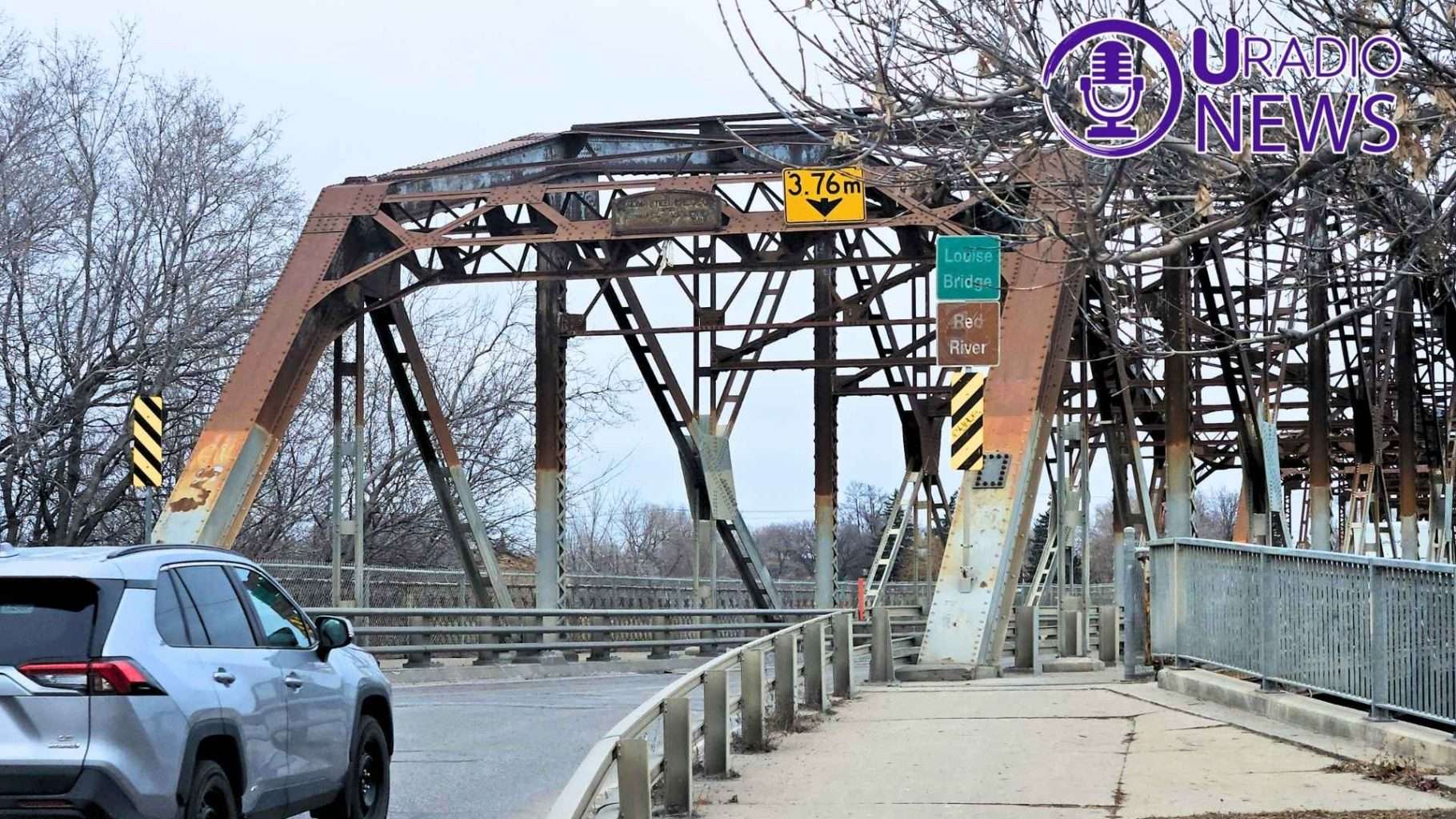
This perspective has resurfaced as the City of Winnipeg begins accepting bids to restore the 115-year-old Louise Bridge. But what impact could a simple bridge have on a community? Well, Goldsborough says the bridge, which connected rail lines, actually meant quite a bit.
“It brought the railway into Western Canada. And that, of course, meant that the hordes of people that would begin to arrive could do so easily before that.”
The current Louise Bridge, built in 1910, is itself the second iteration. As Goldsborough explains, the bridge that we see today is made from the “bones” of the bridge built back in 1881. “What’s interesting is that the original piers, you know, the, the the, the, the stone things that the bridge sits on, like the, there’s the, the metal partly the steel trusses of the bridge, they sit on stone piers, and, and the piers are original to the 1881 bridge.”
The original bridge was intended for the Canadian Pacific Railway, and when the CPR built a new crossing further east, the original structure transitioned. “It was strictly a railway bridge. And that’s it. Later, they began to use it for other things. You know, the train isn’t using it all the time. You could use it to take your horse and wagon across.”
This had a tremendous impact on the surrounding community.
“I think it made a big difference, of course, to the people who lived on one side and maybe worked on the other side of the river, because otherwise you’d either have to paddle across in their boat or maybe walk across the ice in the winter. And as anyone knows who’s walked on the river, it’s sometimes treacherous.”
This makes the bridge a rare surviving artifact of Canada’s railroad expansion, in an era that transformed the prairies. The railway brought settlers, economic growth, and new communities, but not without consequences. “From the perspective of the indigenous people, you know, the mighty and First Nations, I think this is arguably the, the beginnings of a very woeful period in our history when they were, I think, mistreated.” The Louise Bridge becomes, then, a reminder of both progress and the complicated legacies that shaped Manitoba.
Even the bridge’s engineering tells a story. “It had a pivot section. If you actually go on the bridge, you’ll see it. But it’s not easy to see because, well, it hasn’t been used as far as I know, in many decades.” Though the mechanism won’t ever be seen in use again since the era when the Red River was a bustling transportation corridor, its presence is a quiet monument to a time when commerce and travel flowed along the waterway.
When we protect historical spaces, we safeguard the stories that shaped us. We recognize how far we’ve come, and the paths, or railways, that carried us here.