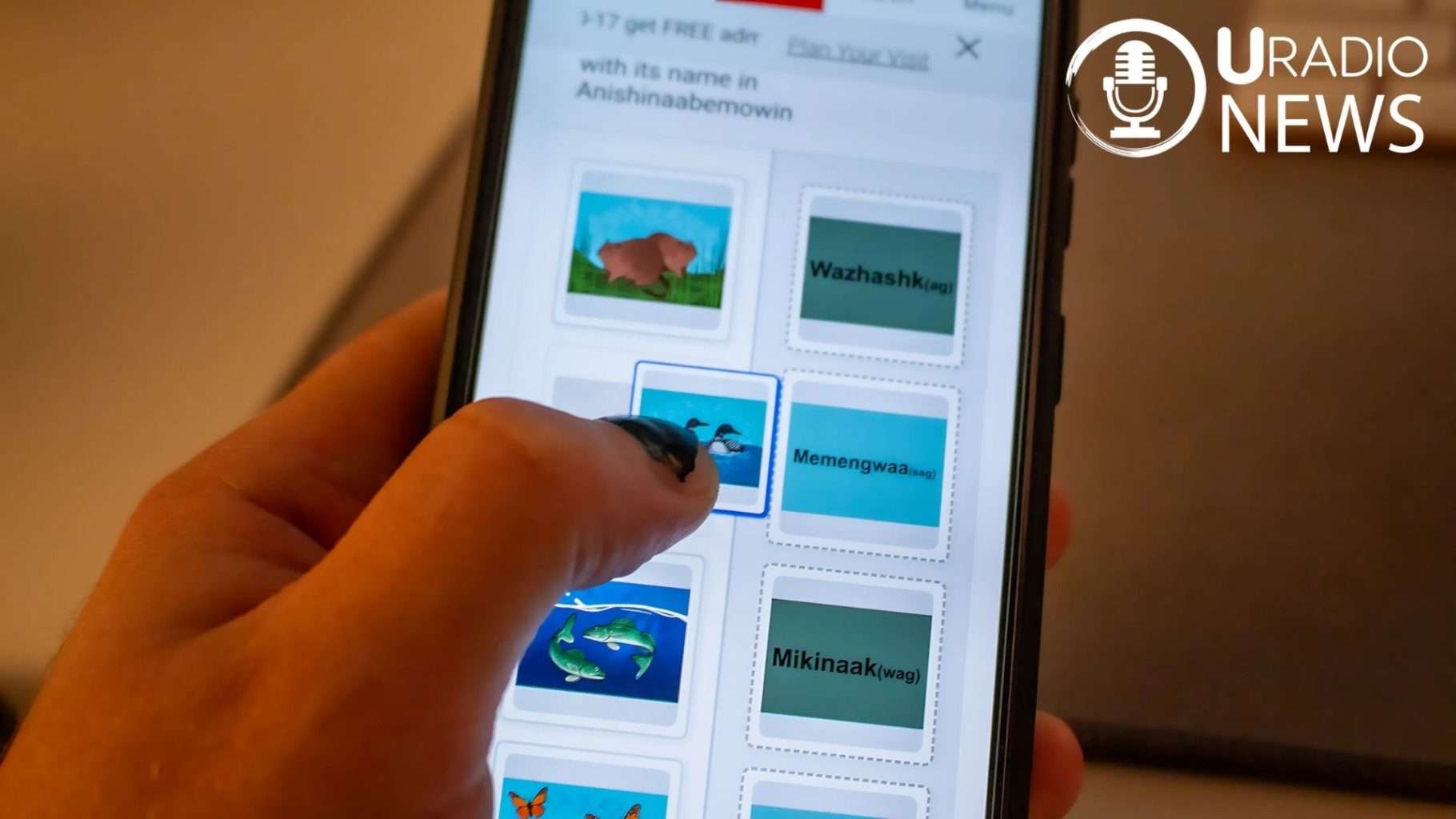
At the Manitoba Museum, a new free digital initiative is bridging the cultural learning gap. The game Anishinaabemowin with the Amik introduces players to 21 animals in Anishinaabemowin, also known as the Ojibwe language, through a series of engaging levels designed for learners of all ages.
Tashina Houle-Gaywish, Head of Indigenous Programming and Engagement at the museum, says the initiative is an extension of the museum’s long-standing goal of integrating Indigenous languages into its exhibits and programming.
“I feel like it’s always been a goal of the museum to implement indigenous languages into all museum spaces. There are some exhibits that feature Indigenous languages, alongside English and French. But my team and I wanted to take it a step further and have something that’s accessible to everyone.”
The game employs a tiered learning approach, starting with animal introductions and progressing to matching and memory challenges that reinforce vocabulary. Houle-Gaywish, who is also a language learner, mentioned her excitement in discovering animal names she hadn’t previously known.
“I knew maybe like bear or, I grew up with bison, so I knew how to say bison in the shop when, but it was really cool to learn all the other ones.”
Collaboration played a central role in the project. The museum partnered with artist Michaela Gilbert, whose illustrations bring each animal to life, and with Indigenous Protocols Advisor Carol, who provided the translations and recordings. “We’re very fortunate to have been able to work with both Michaela and Carol.”
Houle-Gaywish says the game aligns with Call to Action 14 of the Truth and Reconciliation Commission, which emphasizes the urgency of preserving Indigenous languages. “If we, the museum, can help our community and further that initiative, then we’d be very happy.”
Community response has already exceeded expectations. Visitors have shared enthusiasm, with some requesting physical versions for travel, while others have asked about expansions to include more vocabulary or even additional languages. “It’s always been our goal to have all Indigenous languages that are spoken in Manitoba represented in this type of game.”
The museum also plans to incorporate the game into its galleries, potentially through the use of QR codes. “To get people playing the game in our galleries, pointing out some of the animals that are represented in the game. So if they come to the museum and they see the bison, then they’ll know ‘Mashkode Bizhiki’ is the word for bison.”
For Houle-Gaywish, the project is just a stepping stone toward greater Indigenous representation and engagement at the museum. She confirmed that they have a long-term vision to grow the game and expand it to other mediums, but says that will depend on the availability of resources.