How Music Can Make Space for Voices Shaped by Trauma
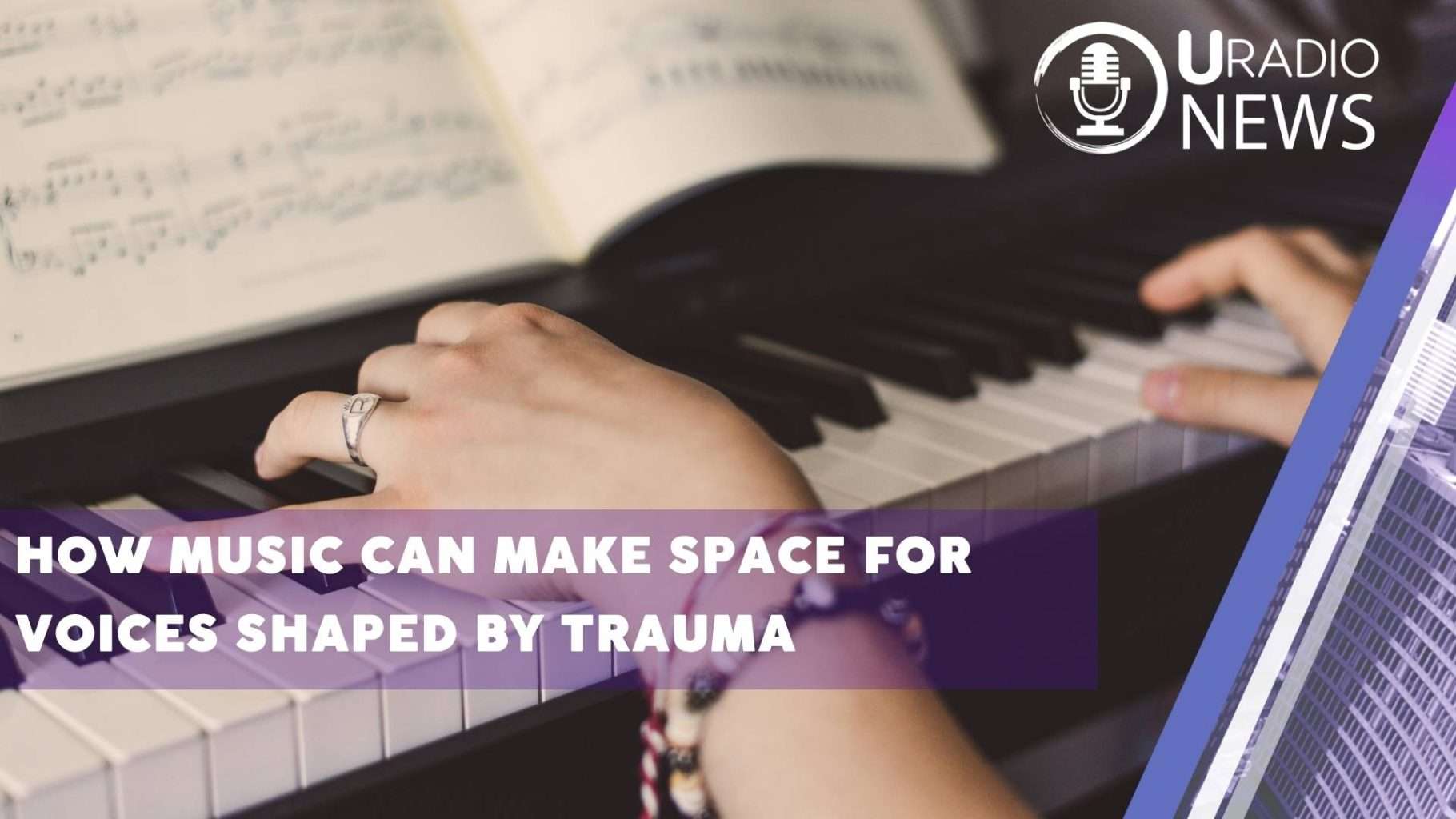
Music creates a powerful container for healing, giving people shaped by trauma a safe way to express the unspeakable, regulate emotions, and reconnect with others through creativity and shared experience.
Content warning: This article discusses self-harm, suicide, and sexual assault.
Healing often happens in ways we least expect. One can definitely find healing through clinical supports, as well as through creativity and connection. Music, in particular, has long been recognized as a strategy for people to express what feels unspeakable, regulate overwhelming emotions, and safely process trauma.
Rita Chahal, Executive Director of the Mood Disorders Association of Manitoba (MDAM), has consistently championed creative approaches to mental wellness. Through programs such as MAD Camp, which integrates music, art, dance, and drama, youth ages 12 to 17 are given space to explore their mental health journeys beyond words.
“They look at creative ways in which they can manage their wellness journey, and they come with various diagnoses. And it’s amazing how they use creativity,” says Chahal. “There’s some really, really great talent.”
By the end of the program, some have written songs, formed bands, or choreographed performances. Most importantly, they create long-lasting connections and friendships.
Connection lies at the core of why music is so effective for mental health, engaging both the emotional and physiological systems. It can calm the nervous system, help regulate mood, and provide a container for emotions that are otherwise overwhelming. Research increasingly shows that music interventions, whether through listening, songwriting, drumming, or performance, can reduce symptoms of depression, anxiety, and post-traumatic stress.
Winnipeg-based singer-songwriter Stephanie Westdal exemplifies how music can be a voice for those silenced by trauma. A world‑travelled teacher and musician, Stephanie has spent over 20 years creating music that speaks honestly about experiences such as self-harm and sexual violence. When conversation felt impossible, songwriting allowed her to speak her truth.
“One of the songs I wrote several years ago is called Bleed, and it’s about self‑harm. Iwas not very comfortable personally talking about it at that time. So an easy way for me to therapeutically talk about it with a little bit of a buffer zone was to write about it.”
She later wroteLesser Than, a song addressing sexual violence. “The number of personal messages I received back, ‘we understand. We get it. I’ve had a similar experience.'”
For survivors of trauma, this kind of representation matters. Trauma can be isolating, and music can help restore some connections. According to Chahal, many of the most difficult topics, such as self-harm, suicide, andviolence, remain taboo in many communities. When artists are willing to name these experiences, they open doors for others to seek help, share their stories, and access support.
“Don’t be afraid to express yourself. Don’t be afraid to ask for help. Don’t be afraid to share it.”
Music does not replace therapy or medical care, and is one of many strategies in the “wellness toolbox.” Westdal says that while music was an important component of her journey of healing, professional support, medication when needed, and ongoing self‑work were central to it.
“I speak with a therapist every couple of weeks. That’s been crucial to my ongoing well-being.”
Music helped her regulate emotions, process grief, and eventually reclaim her strength and agency. Both she and Chahal say the healing journey is not linear, and different strategies work at different times.
Music can soothe, energize, ground, or mourn, depending on what the moment requires. Westal says being a voice for trauma is an act of service, and music can remind us that we are not alone in our pain. “I think that music is the great connector of all people on the planet.”
– Ryan Funk, U Multicultural
Research: Music, Mental Health, and Trauma Healing
Music interventions for PTSD – systematic review (2024): Wang et al., Journal of Mood & Anxiety Disordershttps://pmc.ncbi.nlm.nih.gov/articles/PMC12244202/ [pmc.ncbi.nlm.nih.gov]
Efficacy of music therapy for PTSD – meta-analysis (2024): Ma et al., European Journal of Psychotraumatology https://www.tandfonline.com/doi/pdf/10.1080/20008066.2024.2342739 [tandfonline.com]
Trauma‑informed music interventions for youth (2025):Kramer & Berger, Journal of Music Therapy https://academic.oup.com/jmt/article/62/2/thaf011/8222320[academic.oup.com]
Music therapy and depression – meta‑analysis (2020): Tang et al., PLOS One https://journals.plos.org/plosone/article?id=10.1371/journal.pone.0240862 [journals.plos.org]
Mental health and music engagement – review (Nature, 2021): Gustavson et al., Translational Psychiatry https://www.nature.com/articles/s41398-021-01483-8 [nature.com]