


About 390 million years ago, a fish died. But that isn’t the end of its story.
Fast-forward to 2023, Dr. Melina Jobbins is observing some fragmented fossils from the 90s in the collections at the Manitoba Museum. However, at the time, there wasn’t much material available on the newly described genus Elmosteus lundarensis to gain a good understanding of what it was like in life.
“There were just a couple of drawers of them,” says Dr. Jobbins. “And it wasn’t just Elmosteus. There were a bunch of other small specimens of fish. So there were maybe a handful of specimens of this animal, a handful of fossils of that fish. And I thought, okay, so either there’s really not much of them, or it’s just underexplored. I suspected this was most likely.”
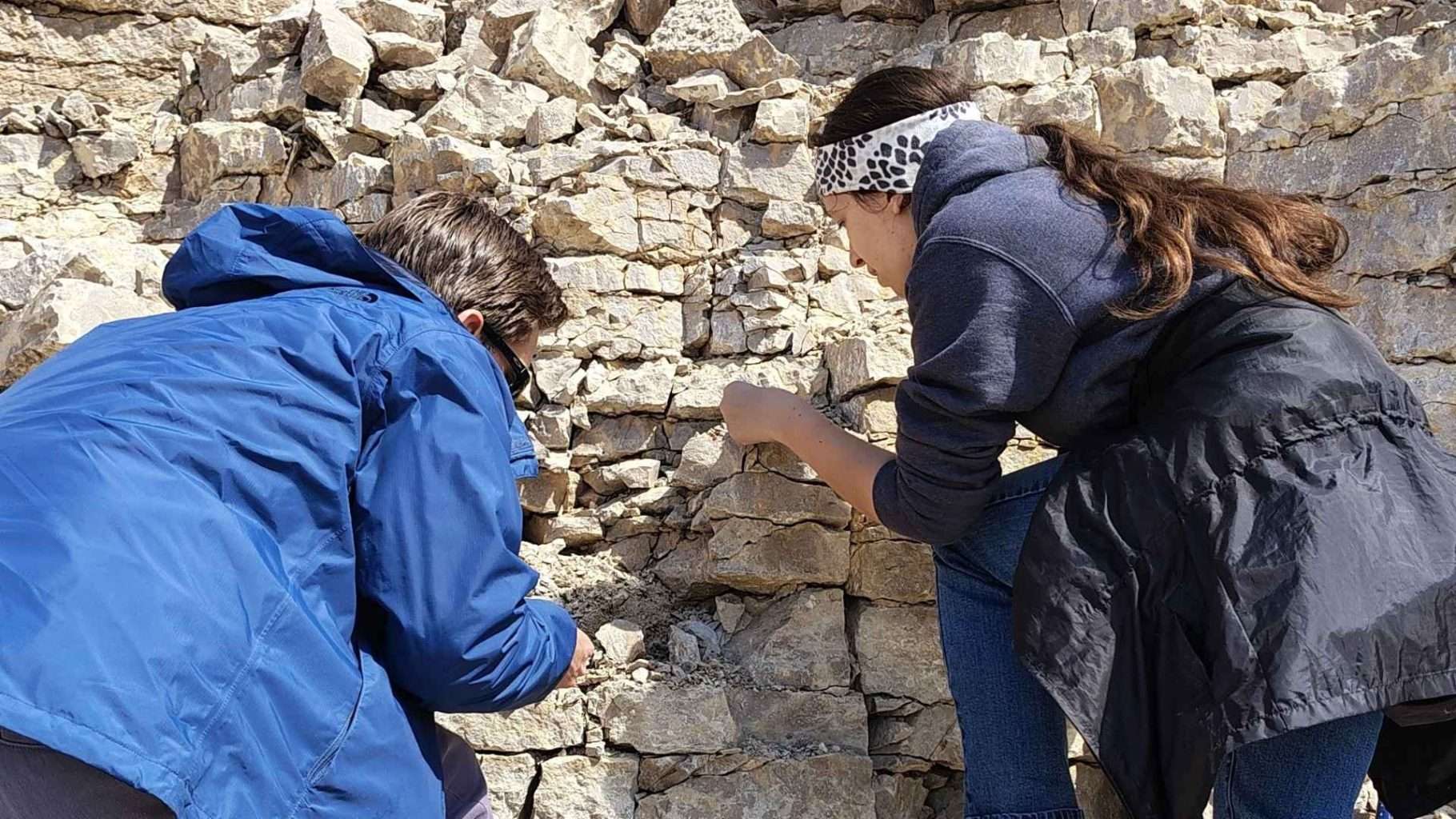
Although it may not seem like it now, a significant portion of Manitoba’s geological history was spent underwater. This has led to the province being the perfect place to find fossils of underwater creatures. So, last year, Dr. Jobbins was granted access to the quarries in which these specimens were previously found, and luck was on her side. She made a major discovery in only about 30 minutes of searching.

“I’m checking out one of these quarry walls, and just sticking on the side of these quarry cliffs right there is a piece of placoderm just resting there, waiting to be discovered.”
Dr. Jobbins is a postdoctoral fellow at the University of Manitoba, researching Manitoba during the Devonian period, particularly the time around 380 to 390 million years ago.
The new genus name, lundarensis, is based on the area where it was found at Lake Manitoba, near Lundar. The placoderm was originally under a different name and was first described by a University of Manitoba graduate student in 1996. This new discovery adds to the growing collection of material of these animals and our understanding of one of our oldest ancestors with jaws.
“It was likely a predator as well because we have the jaw preserved, so we can tell that how many saw the jaws are made of two main teeth. So one of the very front and one on the side, kind of like halfway across the, the functional part and the rest of it is a blade.”
Those jaws are incredibly important, explains Dr. Jobbins, as more research into placoderms can help provide a greater understanding of our origins.
“What placoderms have been used for is to understand the origins of jaws and teeth. So, I’m going to use this in further research to understand how jaws evolved, as well as how teeth evolved in the first place. So, how did they first originate, and what were the early steps to get to what we have today?”
Dr. Jobbins will be getting her hands dirty again, heading out into the field to find more specimens and other fauna from this period. She will also examine other formations, some older and some younger, to observe how species have evolved over the eons.
As for the fish that was poking out the side of the quarry, you can find it in the Geological Sciences Museum in the Wallace Building on the Fort Gary Campus at the University of Manitoba.
– Ryan Funk, U Multicultural


