Housing Promised, But Advocates Say Manitoba Budget Still Falls Short on Ending Homelessness
Manitoba's latest budget pledges new social housing, rent relief, and supports to tackle homelessness. Advocates welcome the intent but warn that the funding and pace fall far short of what is needed to address the crisis.
The Manitoba government’s latest budget places housing and homelessness promises new social housing, rent relief, and wraparound supports. But housing advocates say the investments, while welcome, remain far too small to meet the scale of the crisis, and that delays will only make conditions worse as affordability pressures continue to rise.
Finance Minister Adrian Sala framed housing as both an affordability issue and a foundation for health and economic security in his budget address. “Families face very real challenges today. Month after month, across the country, rising costs make it harder for the middle class to keep their heads above water.” He said the budget offers “immediate relief to address those rising costs with help for your mortgage payments, [and] your rent.”
The budget commits $143.9 million toward building 215 new social and affordable housing units, alongside funding to repair and maintain existing stock. Additional investments expand the Renters Affordability Tax Credit, raise the Homeowners Affordability Tax Credit to $1,700, and provide wraparound supports for people moving from encampments into housing.
“Ending chronic homelessness is the right thing to do, and it’s an investment that will make our health care system stronger as more Manitobans find a path to stable, healthy lives.”
While acknowledging these steps, the Right to Housing Coalition argues they fall far short of what is required. Housing advocate and University of Winnipeg professor Shauna MacKinnon says the government is using the right language but not backing it up with sufficient action.
“They use the words they know they’re supposed to use, but the actions don’t align with the words.”
She says RTH and other advocates have long called for 10,000 new social housing units over 10 years, about 1,000 annually, to make a meaningful dent in homelessness and extreme housing insecurity. The budget’s 215 units, many of which are classified as “social and affordable,” do not meet that threshold.
“Affordable housing doesn’t necessarily mean it’s affordable for low‑income households,” MacKinnon said, adding that social housing must cost no more than 30 per cent of household income. This is something she said many new “affordable” units fail to achieve.
MacKinnon also warns that underinvestment in maintenance of existing Manitoba Housing units continues to create unsafe living conditions, particularly for seniors. She raised alarms about moving people from chronic homelessness into 55‑plus buildings without adequate supports, placing both new tenants and long‑term residents at risk.
“These are low‑income senior women saying: ‘This is my home. I don’t want to be forced out.”
The budget does include funding for wraparound supports and transitional housing, and MacKinnon acknowledges that these measures are better than emergency shelters. But she stresses they should not be the long‑term goal.
“Transitional housing is better than shelters, but it’s not what we should be aspiring to,” she said. “As soon as someone moves into transitional housing, they know they’ll have to find something else.”
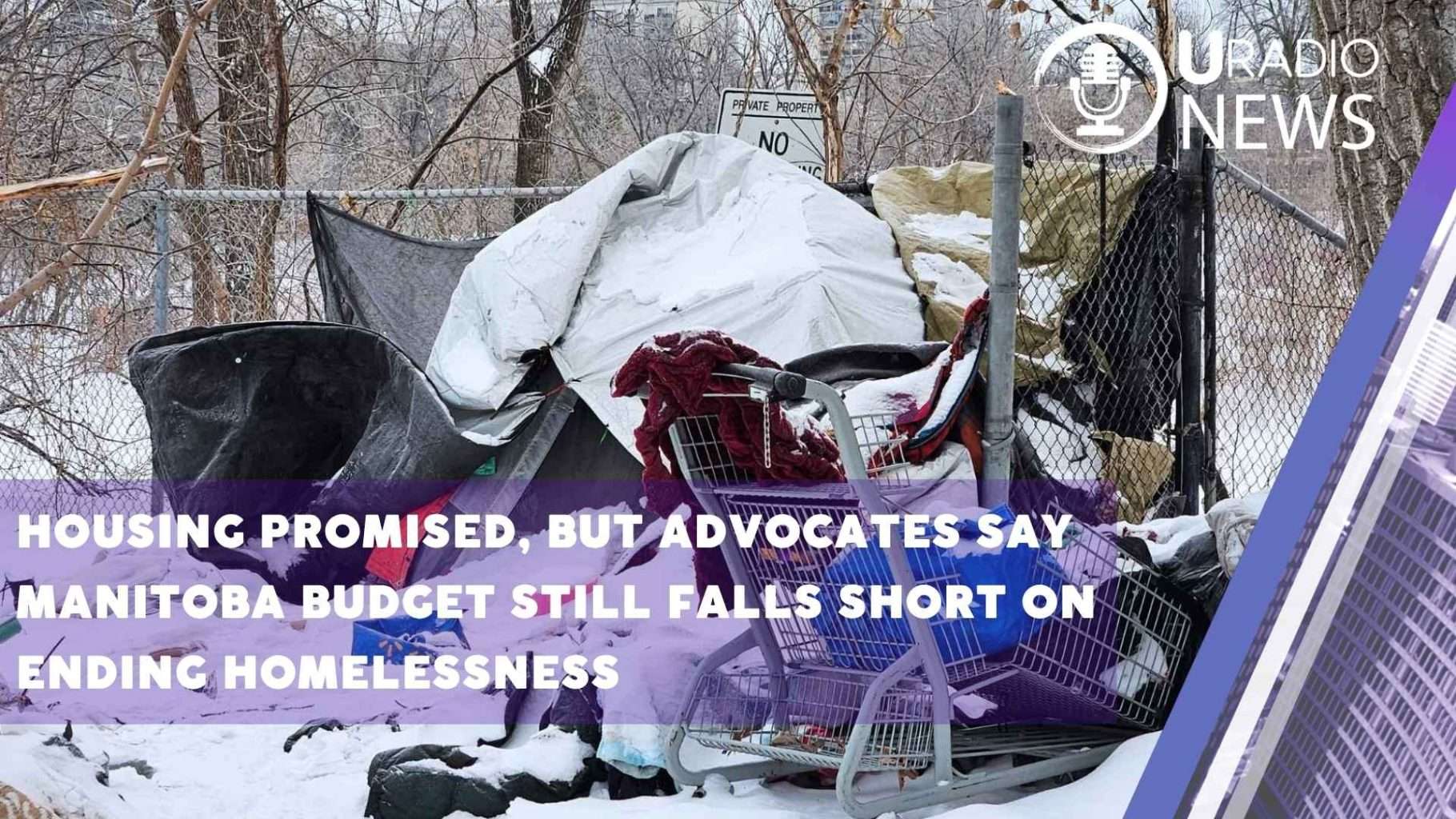
She argued the current focus on encampments is reactive and driven by public discomfort with visible homelessness. “People don’t want to have to see it, so the focus becomes encampments. We can’t just sweep people off the street; that doesn’t solve the problem.”
Sala, for his part, emphasized housing as a cornerstone of health policy. “We want all Manitobans to be safe and healthy, and that starts with housing.”
Advocates agree with that premise but say time is working against the province. With nearly 6,000 households on Manitoba’s social housing waitlist and homelessness counts remaining high, MacKinnon warns that incremental investments will leave more people behind as rents rise and units deteriorate.
“Housing is health. It’s part of the health system,” she said. “You can’t have ‘housing first’ without having housing first.”
MacKinnon and other advocates agree that progress is happening, but without deeper, sustained investment, ending homelessness will remain out of reach.