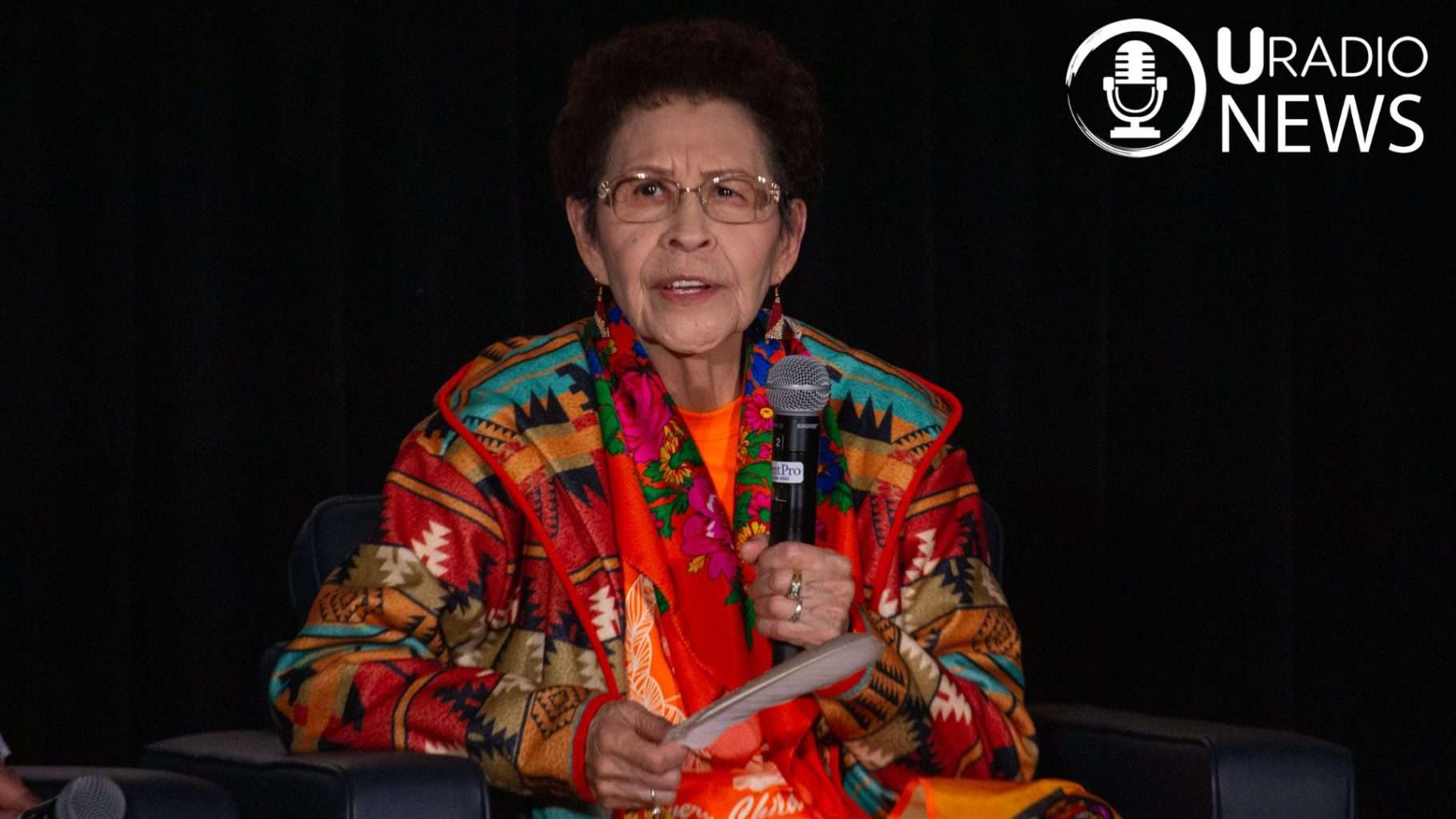
The Winnipeg premiere of the docudrama Return to the Falls was like a homecoming. On April 16, relatives, fellow residential school survivors, and community members packed into the Canadian Museum for Human Rights to hear the story of Elder Betty Ross.
“My hope is that people will acknowledge what happened not only for me but to thousands of children that never came home. I want to be that voice for them.”
As Elder Ross stepped onto the stage before the film began, a hush settled across the audience. She brought greetings in her language of Cree and spoke about embracing compassion and empathy. Each of her words transfixed the crowd. Others who spoke that evening called Elder Ross a powerful woman, a survivor and someone who has grown and thrived.
Directed by Eppo Eerkes, the film cuts between modern conversations of Elder Ross and reenactments of moments of her life from Pimicikamak Cree Nation to Winnipeg. Eerkes first heard about Elder Ross’ story from his daughter when she introduced him to the book Sugar Falls. He was then encouraged to reach out to Elder Ross.
“I called her and told her who I was, that I’m a filmmaker, and I’d love to work with her nation, and work with her people, and try to help tell that story, be an ally for her. Then she said, ‘I’ve been waiting for your call.'”
The story, which Elder Ross calls her truth, tells of the trauma she experienced as a girl, played by Albertan actor Amelia McLintock, ripped from her family and forced through residential school. It was the moments she spent at Sugar Falls with her father and the sacred teachings he instilled in her that pulled her through the horrors she faced.
“It’s about listening, you know,” says Eerkes, explaining how he approached such a personal narrative. “So, when working with Elder Betty, I just was listening. That’s it. I did nothing else but listen. And that was a solid year of listening and not recording anything and taking notes. If I did anything, I wrote things, ideas, concepts, and thoughts on what this could be and what it could become.”
Filmmaking is incredibly personal, and Elder Ross says she was initially hesitant.
“I had to explain to him about Indigenous protocol as offering his tobacco first. And then, I had to do a ceremony. If this is the right way, we’re going to move on with Sugar Falls. And that’s exactly what we did. So there was a little bit of hesitancy there, but he understood.”
The film took three years to finish, but when she saw it for the first time, Elder Ross said she couldn’t believe it.
“I’m like, could this be real? You know, there’s me out there telling my story to the world, which is true,” explains Elder Ross. “It was surreal. I went back to Sugar Falls, and I remembered all those teachings that I had. It’s coming true because this was the truth. And, you know, it felt good. It felt like, okay, this is the journey that I’m going to be taking. And I see it’s on a screen now for the world to see.”
The journey is just beginning for Elder Ross and her story of Sugar Falls as she and the film team embark on a nationwide tour and a journey of Truth and Reconciliation.