Change is Slow but Coming: Indigenous Organization Urges Action Beyond Symbolism
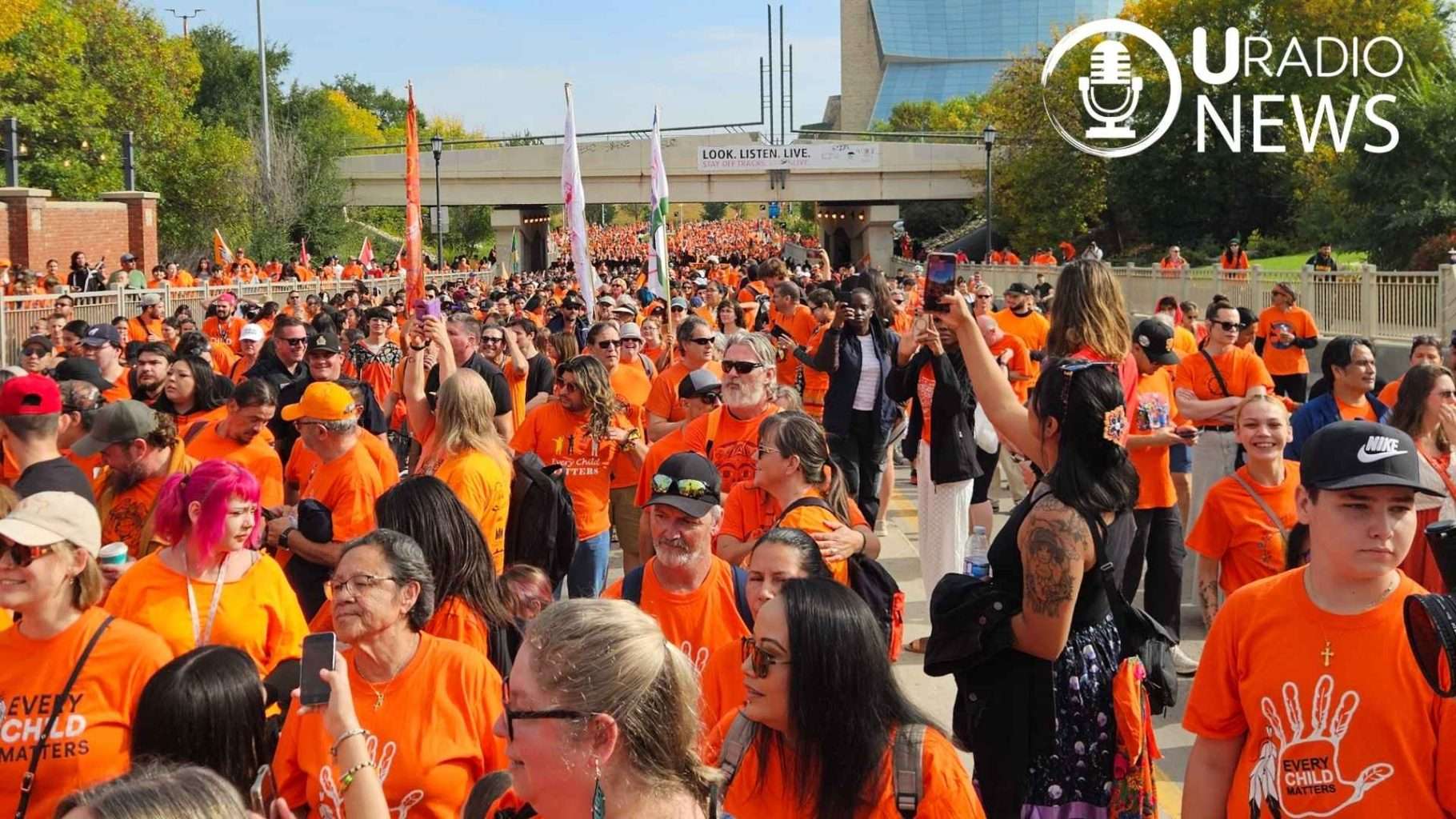
It was not a quiet moment, but one filled with reflection, unity, and determination. At the Oodena Circle at the Forks, thousands gathered on the National Day for Truth and Reconciliation, chanting “Every Child Matters,” a call to acknowledge Canada’s painful history while committing to a more just tomorrow.
Premier Wab Kinew addressed the crowd, noting that continued community presence and advocacy are what ultimately led to September 30 being recognized as a statutory day of remembrance.
Change has happened. But advocates continue to impress upon the urgent needs of Indigenous communities, including housing and addiction services. The Ma Mawi Wi Chi Itata Centre is one such organization that aims to address these needs.
“We’re considered the grandmother of the North End because of the work we’ve been doing. And we started doing this work because of inequities in our community,” explained Marion McKenzie, Program Support Manager at the Ma Mawi Wi Chi Itata Centre. “It began with the loss of a child while in the care of the child welfare system. And a group of advocates came together and said, ‘Enough is enough.’ And so when they came together, they made a decision that they wanted to have a bigger voice and be leaders and make change.”
For 40 years, the Ma Mawi Wi Chi Itata Centre has strived to create that change. McKenzie stated that progress is being made, albeit slowly.
“I believe that that people are listening to us, that this is the best way to answer all of the calls that are in those 94 calls to action is to to do those things with us as indigenous people and those of us that have those relationships, those trusted relationships with the communities that need to see action and need systems to change so that they can can live good lives and healthy lives. And, you know, really share their gifts with the rest of the world. And so we believe that things are changing. They are just slow.”
Decades ago, Indigenous voices were excluded from decision-making. Today, those voices are no longer at the back of the room, said McKenzie, but are part of the decision-making process.
“That’s a really important piece to always remember along this journey of reconciliation. It’s about doing things together, not having one group being responsible for everything. We have to walk collectively. And survivors will always say that it’s about being in a relationship together. And if we don’t do that together, then it’s not a true path of reconciliation.”
The Ma Mawi Wi Chi Itata Centre has identified housing, food security, and mental health as the most pressing challenges facing Indigenous communities. McKenzie emphasized that these are not merely social issues, but structural inequities rooted in colonization and perpetuated through modern systems.
“Those are the areas that are still very, very prevalent that need to be addressed. And, those are the basics of life, you know, like, we wouldn’t don’t I don’t understand how we can be okay with this being such an epidemic for this many years.”
McKenzie reiterated the importance of collaboration and noted that for many Indigenous communities, culture plays a vital role in the healing process.
“We always incorporate culture and connection and reconnection to community. And culture is always number one. Because there’s that loss of connection, especially being in an urban center. There’s the loss of connection to community and the loss of connection to culture. So we do everything we can to promote that.
As the crowd dispersed on September 30 across the province, the message was clear: reconciliation is not a single day but a collective and ongoing journey. Those who are non-Indigenous should educate themselves about the history of residential schools, the 94 calls to action, and how to implement them.
– Ryan Funk, U Multicultural