


Less than a fraction of a per cent of Manitoba’s original tallgrass prairies remain. Given the cultural and ecological significance of these prairies, efforts are needed to both protect them and promote their expansion.
Winnipeg’s Living Prairie Museum hopes to achieve this through a new collaborative community sculpture called paskwâwi-mostos (caretakers of the prairie). Nature Education Coordinator Josh Pearlman says it will not only teach people about grasslands but also inspire a new generation of naturalists.

“We do a lot of education out of our building to teach people about the importance of the prairie, recognizing that a lot of people relate to that information in different ways,” explains Pearlman. The museum reached out to the Buehler Gallery at Saint Boniface Hospital to collaborate on a project for an upcoming show called “Tending to Wild.” Collaborating with Indigenous artist and educator Britt Ross to create a bison sculpture that can “carry” seeds, much like real bison, to a new garden that will be installed outside the Saint Boniface Hospital.
“Bison are, by some descriptions, considered a keystone species, as they have an outsized impact on the habitat in which they live. So one of them would be grazing and trampling tree seedlings. They’ll create what’s called bison wallows, which are shallow sort of pools where they bathe in the dirt that ends up forming. Seasonal ponds that allow other creatures to survive, but also spread seeds both in their fur and in their manure.”

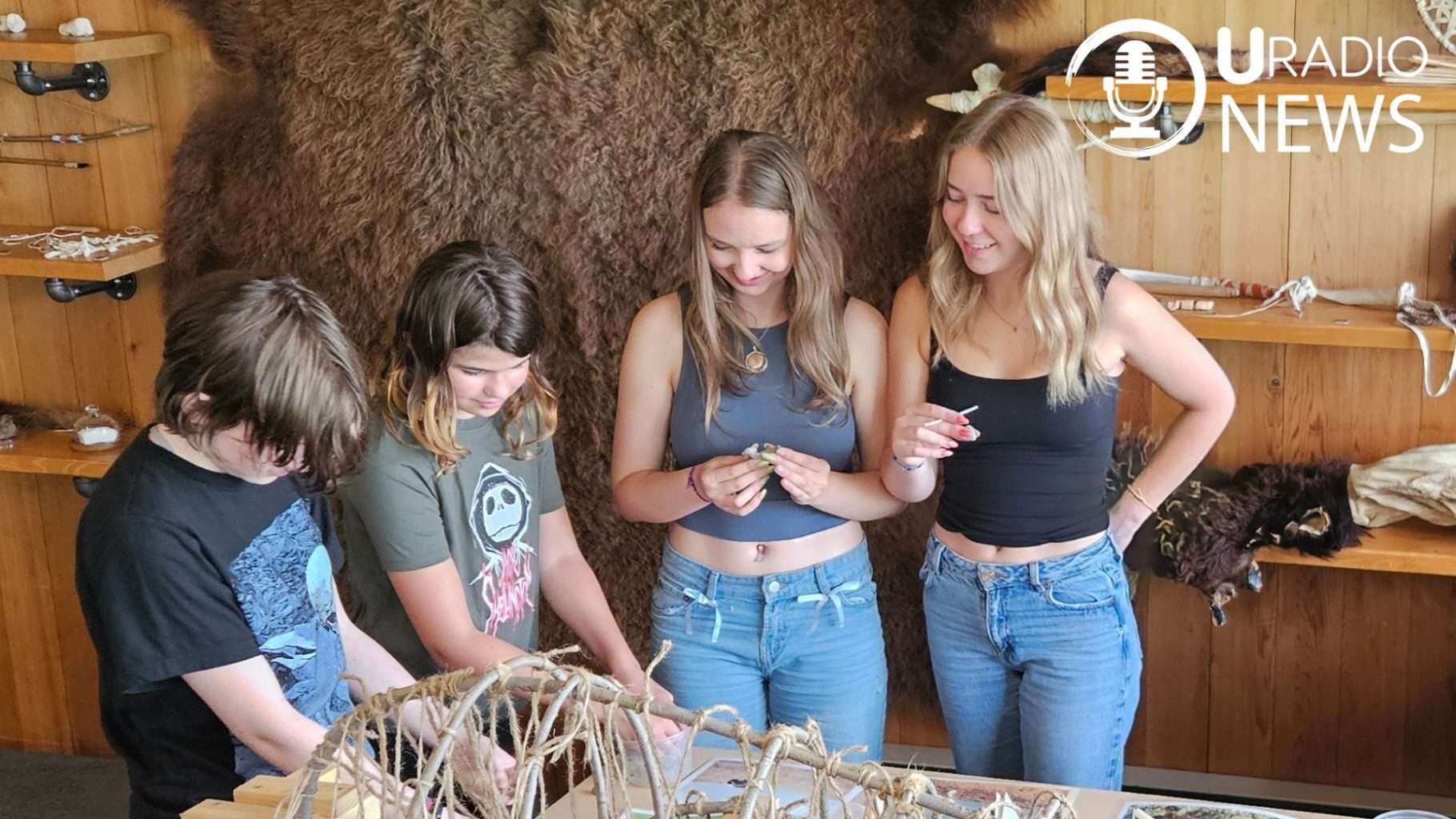
The collaborative nature of the sculpture has visitors to the museum create beads of clay containing a diversity of native wild plants. Pearlman says he estimates that over 100 people have helped so far.
“There’s a mountain of little clay beads building up, both in our gallery and in our office. But we’re excited to have more people coming through. And helping to contribute and hopefully learning a little bit about bison and their roles as caretakers of the prairie.”
Not only a keystone species, the bison is an integral part of Indigenous cultural and spiritual beliefs. Ross, whose father is Cree and mother Métis, works with children and has brought many of them to the museum. There, she speaks with them about the plants, medicines, and Indigenous teachings, particularly the importance of respect.
“The gift of the bison, we say, teaches respect because the bison kept us alive for thousands of years. The bison, when you go to hunt, when you offer tobacco, and you ask if there’s any spirit of the bison or an animal willing to come forward and offer its life so that we can live. So when it does that, when it sacrifices its life, you have to use every single part, because that’s the way you show respect for that sacrifice.”
Ross first got involved with the museum when she attended a workshop on planting native plants. Ross says the man running the workshop, a contractor, made disrespectful comments, referring to the bison as the “Aboriginals supermarket.”
“it was kind of played for a laugh and made me feel very othered and very like it was very disrespectful to my culture and like our spiritual beliefs, because we see them as grandfathers and like they’ve given this gift of life to us.”

Ross then connected with Pearlman, whom she hadn’t met before. She asked if the museum would be open to suggestions on how to improve the workshop and approach it in a culturally sensitive and appropriate manner. Pearlman was open to the suggestions and later asked Ross about a potential collaboration.
“He approached me earlier in the summer and said, ‘Would you be interested in doing this project with me?’ And I thought, yeah, that would be great. Everything kind of comes full circle in that way. Everything in indigenous spiritual beliefs is a circle. So everything’s interconnected, so it all fell together perfectly.”
As visitors come to the museum and create clay beads, they are taught about the biological diversity of the tallgrass prairies and the role they play in both the environment and Indigenous cultures. Pearlman says they also teach about the loss that would come if these prairies aren’t protected.
“From a strictly ecological perspective, the diversity of this site is such that we’ve got species that you won’t find commonly elsewhere in the city. And that’s true of some of the larger patches of protected prairie and Winnipeg. A lot of what’s left of native prairie is little road right of ways or patches clinging to the sides of railroads. And those can blink out as development increases.
Ross adds that it would be a devastating blow for Indigenous communities.
“It would be a huge cultural loss for us to lose these native plants on the prairies. Even some Elders are unable to find certain plants, and some of them haven’t grown up seeing these plants because they disappeared before their time. Right. They might have heard about it from their own Elders, but there are none of them left. It’s already happening, and we need to prevent it from happening any further.”
There is good news. Pearlman explains that there has been a lot of momentum in changing how urban development is done. In new developments around retention ponds and other peripheral natural areas, there are efforts to restore them to native plants. However, it still isn’t as biologically complex as a tallgrass prairie, he says.
More change will come from teaching people to love the natural world, says Ross, with the sculpture just one small approach to doing that.
“It’s important for everybody to come and build community and see that there’s hope for the future. And maybe we can bring back the bison somehow. Maybe we can bring back some of these plants that are disappearing and being replaced by all these invasive species. It’s a hope for moving forward,” explains Ross. “All of the teachings are so important. We also need to find ways to engage people and make the learning experience interactive, so that they’re actively participating while learning. And so they feel like they’re a part of something.”
Visitors to the Living Prairie Museum can add their artistic flair and be part of the living sculpture until August 31, after which it will be moved outside the Buhler Gallery as part of the exhibit ‘Tending to Wild’ from September 11 to November 15. Pearlman says those seeds will then become a small prairie outside the St. Boniface Hospital.
– Ryan Funk, U Multicultural


