






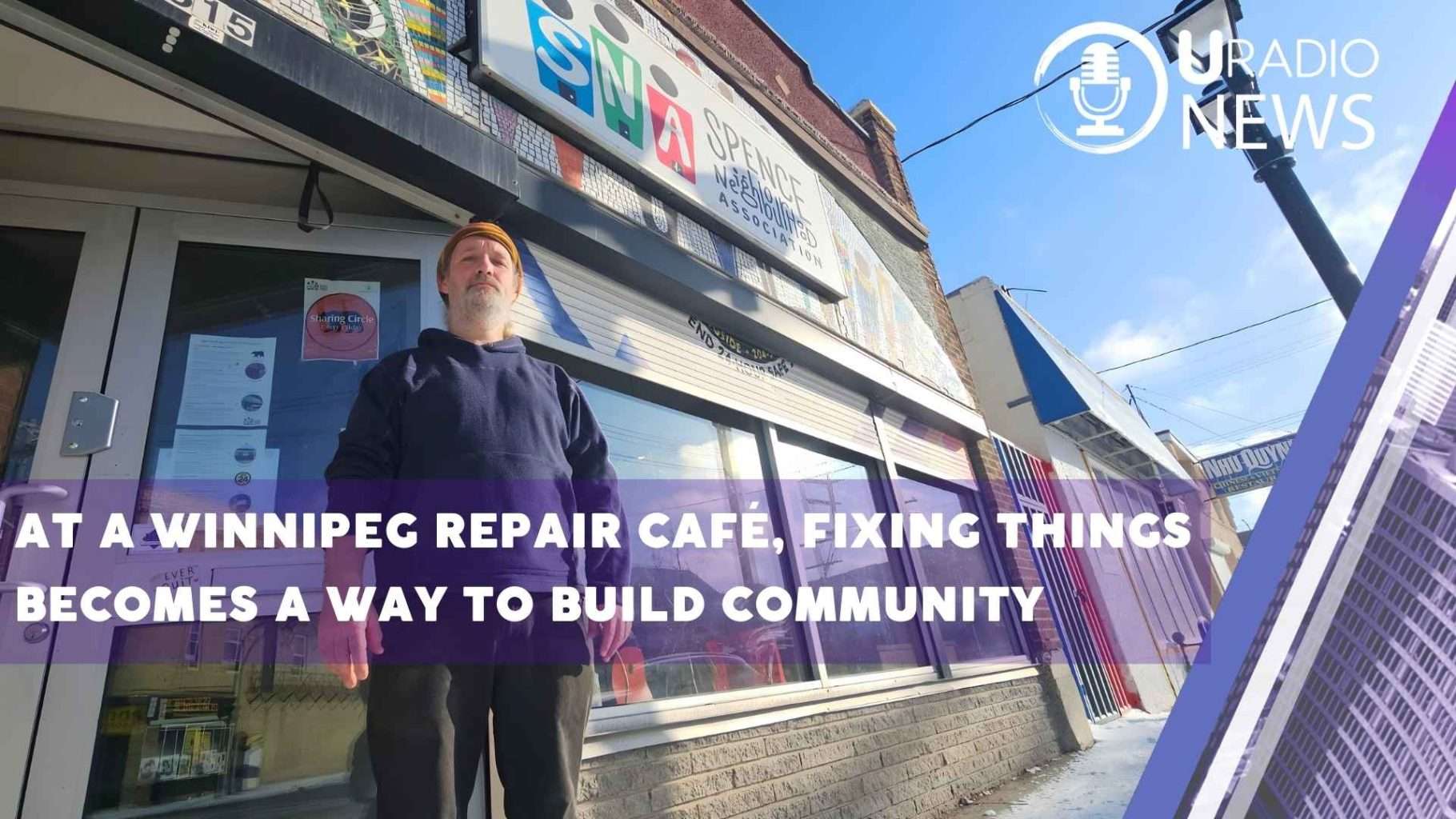
Standing over workbenches scattered with screwdrivers, sewing kits, and the occasional power tool, neighbours lean in close to talk through repairs. A broken toaster becomes a shared puzzle, and a frayed jacket zipper turns into a teaching moment. At Winnipeg’s Repair Café, fixing everyday items is only part of the work being done.
Hosted by the Spence Neighbourhood Association(SNA), the Repair Café brings community members together to repair everyday items that might otherwise end up in the landfill. Held once a month inside the association’s space, the event pairs people with broken belongings with skilled volunteers willing to share their time and knowledge.
“[It’s] a place where, just regular folks from any community can gather to try and help each other, fix, daily items, that are in need of repair,“ said Stephen Kirk, the environment and open spaces coordinator for the Spence Neighbourhood Association. “I had seen stories of this happening and thought, oh, what a great idea.”
The concept of repair cafés began in Europe, where community-led repair events emerged as a response to growing waste and the rising cost of replacing goods. Kirk said he was inspired by those stories and realized SNA already had what it needed to make it happen.
“I realized that we had a lot of tools in the space. The space wasn’t getting used after office hours. And so I thought, wow, we have the capacity to organize a similar event here in Winnipeg.”
Since launching just a few months ago, the Repair Café has drawn steady interest. Community members arrive hoping to save money, reduce waste, or hold onto items they’re attached to. Volunteers come ready to troubleshoot problems and pass on hands-on skills.
Some of the repairs have been straightforward. Others were much more puzzling. “The thing that made it interesting was that the spool of the weed whacking thread, whatever you call that, was halfway up the handle as opposed to being right next to the motor as they normally are,” he explained. “No one had ever seen anything like it. It involved taking the whole thing apart because the plastic weed-whacking stuff, whatever it’s called, had to thread through halfway down the handle to the spinner, to the machine, and to the motor. And so we had to take the whole thing apart.”
But not every repair is a success. An oversized microwave from the 1970s proved too much for the volunteers, but Kirk said even unsuccessful repairs have value. People learn how things work, how they fail, and why today’s products don’t always compare to older ones.
Affordability is a major draw, particularly in a low-income neighbourhood like Spence. Kirk said the cost of replacing items, or even specialty replacement parts, can be prohibitive.
“If you can fix something, you don’t have to buy a new one,” he said. Another motivation is keeping waste out of landfills. “If I can fix this, then I don’t have to throw it in the landfill. I can keep using it. If it’s a tool or a piece of clothing or transportation that you’ve been using for some time, you might have, you know, an attachment or a connection to this item. And it would be nice to keep using it rather than just trash it.”
However, Kirk said he believes the repair café’s largest impact may be social. “We don’t ask ages when they show up here, but we’ve definitely had children to grandparents,“ Kirk said. “It brings people together and strengthens community, gets people talking to one another, helping each other out. You know, I think of this as mutual aid in action. We can help each other improve the quality of our lives.
The model builds on Winnipeg’s long-standing community bike shop culture, where volunteer-run repair spaces have thrived for decades. Kirk hopes Repair Cafés will follow a similar path, expanding into neighbourhoods across the city.
“I think one of the best results would be if someone saw what we’re doing here, and saw that it was working and was like, oh, well, I could do this in my neighbourhood. I have a space and some tools. I know some people who are pretty handy. I think that would be a really great.”
For now, SNA’s Repair Café continues on the second Wednesday of each month, fixing broken things and strengthening the connections between the people who bring them in.
– Ryan Funk, U Multicultural