Archives Return to Carnegie Library After a Decade Away
History is often an ambiguous term. It isn’t tangible, just a word to describe the past. But when you walk into the Winnipeg Archives, over a century of stories becomes something you can see, smell, and touch—the scent of aged paper, the quiet slide of drawers, the soft rustle of pages.
That living history is about to enter a new chapter. After more than a decade in a temporary home on Myrtle Street, the City of Winnipeg Archives will return to its original site, the historic Carnegie Library, following extensive renovations set for completion in 2027.
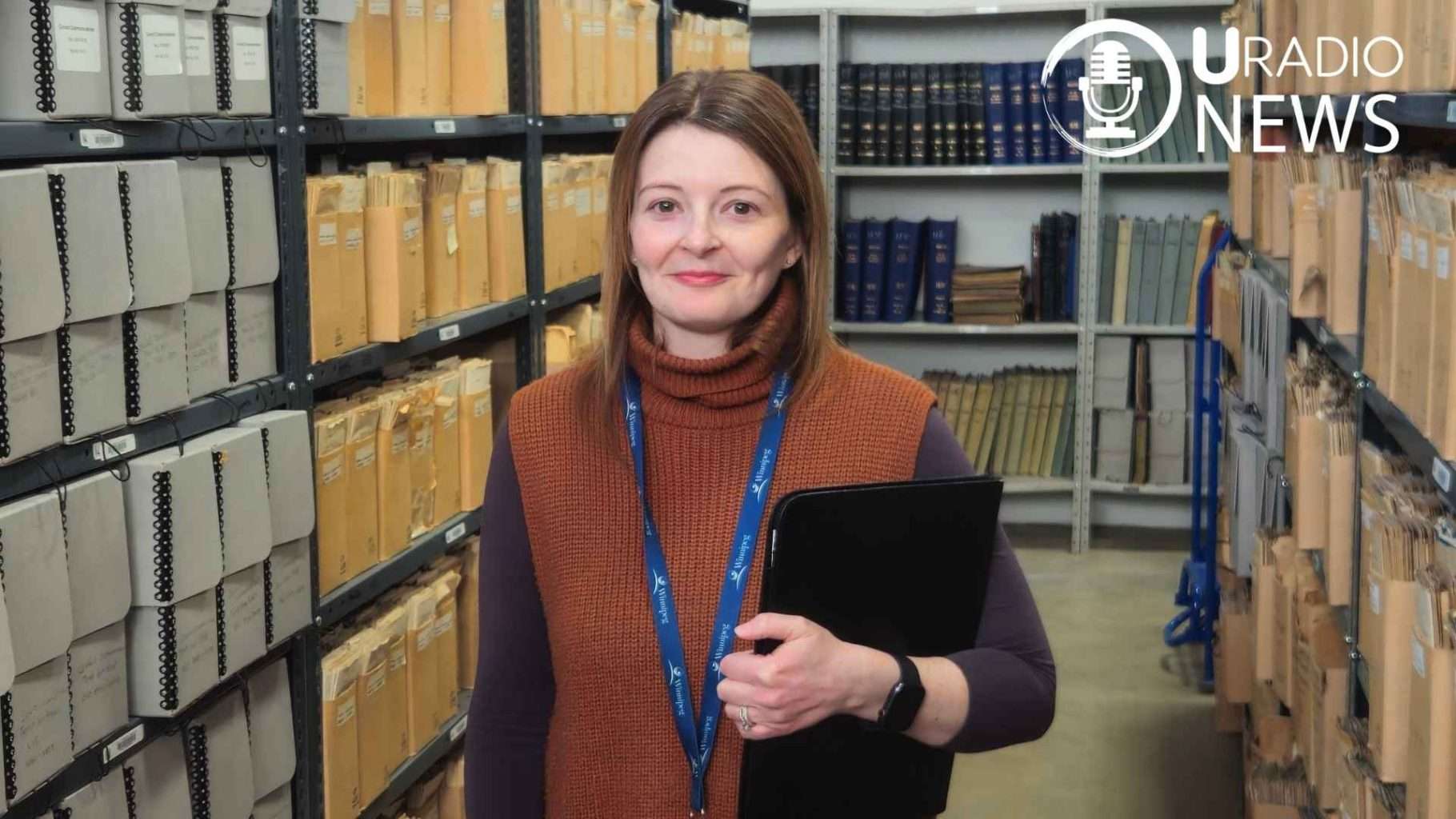
For Senior Archivist Sarah Ramsden, the move represents a full-circle moment.
“For me, it’s really about delivering our mandate in a better way. Like, it is ultimately our responsibility to preserve records for future generations. And the collection will be preserved much better. It will be safer in the newly renovated building. So there’s that. And also, it’s about providing a welcoming space for people to access records.”
The Carnegie Library, originally built in 1905 through a grant from philanthropist Andrew Carnegie, has always stood for public access to knowledge. Ramsden sees the Archives’ return as a continuation of that vision.
“Andrew Carnegie, the philanthropist, thought that public access to knowledge would ultimately create a better world. And I really do see our use of the building as continuing that vision by providing public access to knowledge and providing space for the community. And I love that we’re going to be able to continue this legacy of public service that the library has provided.”
The building suffered severe water damage during a storm in 2013, forcing the Archives to relocate. While no records were lost, conservation work and public programming were halted. The renovation will change that. Plans include a climate-controlled vault, conservation lab, research room, and multipurpose space for exhibits and community events.
Those records include everything from city council minutes and development plans to the personal voices of residents who helped shape Winnipeg. One story that stands out to Ramsden is that of Rooster Town, a Métis community located near Grant Park, which was displaced in the mid-20th century.
“Rooster Town was a Métis community in the Grant Park area that was ultimately bulldozed by the city to make way for development. At the time of those changes, there were a lot of harmful myths about the community,” explains Ramsden. ” There were people who said that, Rooster Town community members didn’t own the land. They were, quote, ‘squatting on land.’ But permits show that these homes were owned by the community members who took out permits. The assessment shows they owned the land, and they paid taxes. Having those records confirmed what community members already knew.”
For Ramsden and her team, the archives are about preserving memory.
“These are the stories of our city,” she says. “Like memory, archives give us a sense of who we are, allowing us to revisit and learn from our past.”
As 2027 approaches, the Winnipeg Archives’ return to the Carnegie Library represents a restoration of connection. A place where Winnipeggers can explore their city’s history, rediscover lost stories, and write new ones for generations to come.