A Métis cabaret rooted in story, song, and survival has arrived on the prairies.
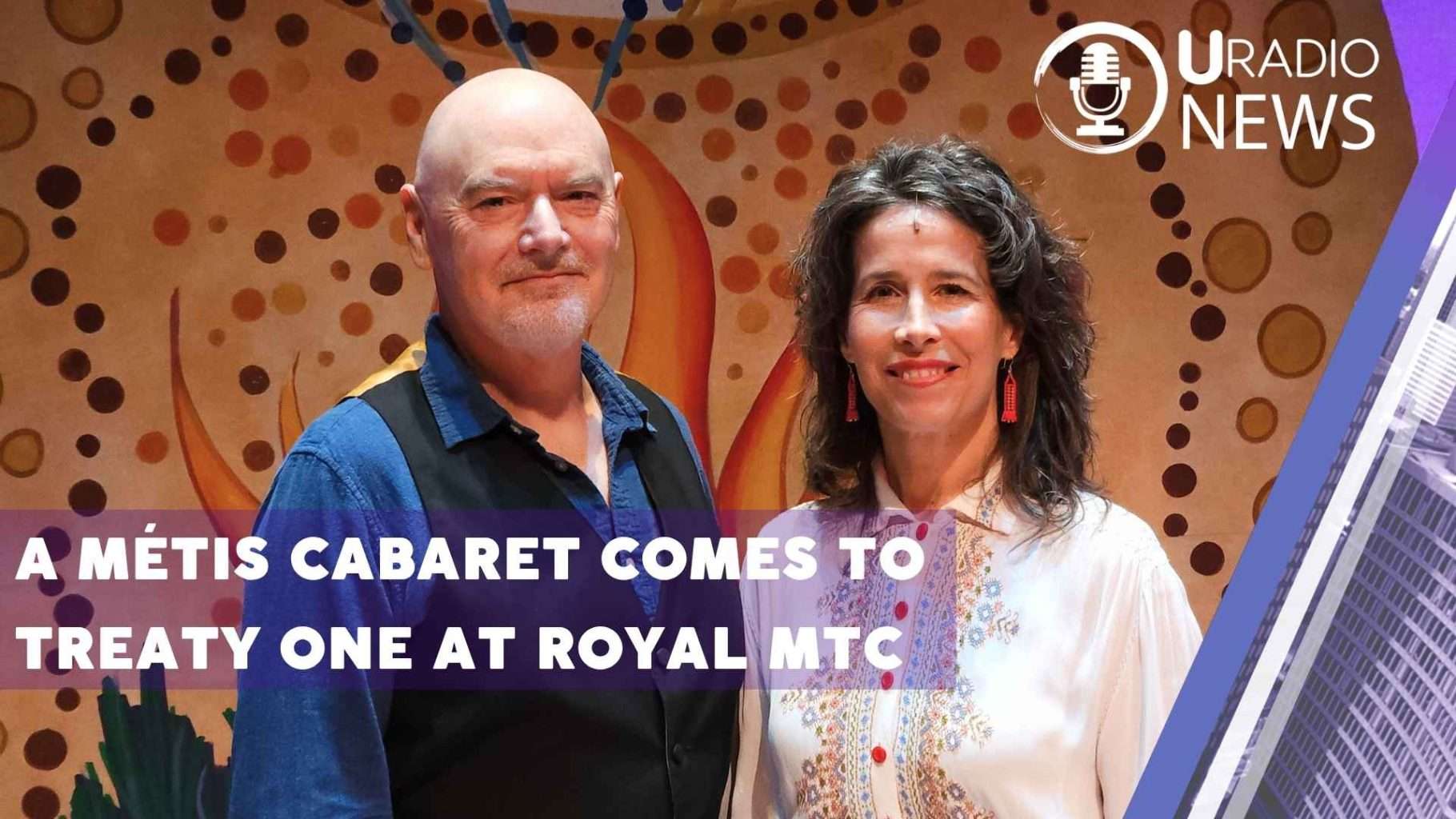
Rubaboo – A Métis Cabaret, created and performed by Métis actor, playwright, and singer Andrea Menard with music by Menard and longtime collaborator Robert Walsh, is now on stage at the Royal Manitoba Theatre Centre (Royal MTC), bringing its fifth iteration to Treaty One territory, the homeland of the Red River Métis people.
“Yes. It’s terribly exciting. You know, we’ve always known that it was meant to be in the Métis homeland,” said Menard. And of course, being here and my family’s here, so, you know, it’s an extra vulnerable and exciting at the same time.”
Rubaboo comes from the Michif word for “leftovers stew,” and weaves Métis history, humour, memory, and music into a cabaret‑style experience that invites audiences into a shared circle. Directed by Alanis King, Rubaboo blends personal storytelling with political history, balancing joy and serious topics such as the residential school system.

From its earliest conception, Rubaboo was designed to explore that complex emotional territory, and it doesn’t shy away from Canada’s difficult histories of displacement and genocide, but refuses to leave audiences stranded in grief.
“I’ve gained the skills to move through emotional states. I’m good at it. And so by being able to embody that on stage, I also care deeply that people who are not as good at embodying those things, we’re taking them through a whole bunch of different states.”
That emotional design is built into the structure of the show.
“So there’ll be like some difficult stuff. And then the next minute, we’re breathing and laughing and then making sounds and singing so that all of a sudden they’re not left in that spot. They’re being moved through.”
Music plays a crucial role in that movement, helping audiences absorb that history.
“Music can be magical, and it cuts through the logical brain, which is very important in a story, especially about any Indigenous topic,” Menard says.
“So music is a beautiful tool in reaching people’s hearts. And this is paramount to our show in reaching people’s hearts.”

For musical co‑creator Robert Walsh, that emotional access is one of the reasons song is such a powerful storytelling vehicle within the cabaret format.
“I think as a songwriter, one line can do the work of a paragraph in a song, and music moves it in a different way than just telling. There’s a place for all of it, of course, but music has this magic that when it’s done with the impact, it can, it can really change things quickly.”
Now in its fifth run, Rubaboo has evolved alongside a changing world. Menard notes that while some refinements have been technical, others have been deeply spiritual.
“Oh, we have changed so much. We found that the world has also changed around us.”
She says sections rooted in Métis cosmology and creation have taken on new urgency.
“We found that those particular pieces that came through me are even more apt and more poignant right now in the world we live in.”
Walsh echoes that sentiment, saying audience readiness has shifted.
“Some of the songs I think are resonating more now. People are a little more aware of some of the things we’re singing about now.”
Crucially, the creators have resisted framing the work as a confrontation.
“We don’t want to point fingers at people for some of the stuff we’re trying to work through. We want to work together.”
That collaborative ethos extends beyond message to process.
“We get together every night and really do prayer and commit sort of to every show,” Walsh says. “On a nightly basis [that] brings us together over the long haul, has helped us really develop chemistry.”
While Rubaboo has always been grounded in Métis history, this run adds new specificity for Treaty One audiences. Director Alanis King says the Red River context now sits front and centre.
“It’s an ode to the people who originated here in this particular place, with the settlements of the Red River and all the subsequent settlers that encroached… but at the same time, in that celebratory way of Andrea Menard’s style of delivery, it’s a way to invite people back in terms of reconciliation and also just sharing.”
King says the language, history, and geography will resonate strongly in Winnipeg.
“It’s not meant to shame or blame. It’s meant to be inclusive and to do that cross‑cultural sharing.”
The cabaret format, part concert, part theatre, part direct address, allows Rababoo to shift effortlessly between worlds: the past and present, humour and pain, spirit and song. For Walsh, music helps in that.
“It’ll touch your heart because of the music. And then if you add a message to that, it can really cut through layers, where like, listening to somebody talk is a whole different experience, right? So it has that power. But I think one of the beautiful things about the show is we do that, but we also combine it with all these other elements too.”
Like many performances, Rubaboo is powerfully intimate and relational. Menard says they fall in love with an audience every single night and can’t wait to fall in love with audiences here in Winnipeg.
“If an audience decides to pick up on that energy we’re sending out, then healing really can happen.”
Don’t miss your chance to enjoy some “leftover stew” at the Royal MTC until May 23.
– Ryan Funk, U Multicultural